


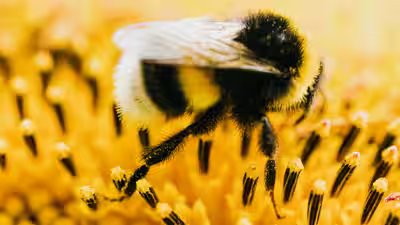
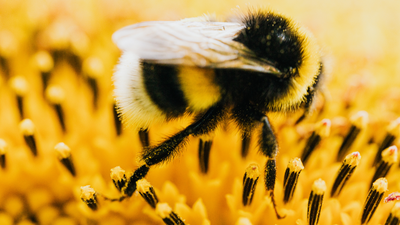
Bees are among the world’s most important pollinators, supporting wild ecosystems and helping produce many of the crops humans depend on. But while climate change has long been linked to rising temperatures and habitat loss, scientists have now identified another growing threat: increasing atmospheric carbon dioxide (CO₂). A new study suggests that elevated CO₂ levels may be disproportionately harming the world’s largest bees, leaving their populations smaller and less genetically diverse while favouring smaller-bodied pollinators. Because larger bees are often the most effective pollinators, the findings raise fresh concerns about the future of global food security and biodiversity. The research is detailed in the peer-reviewed paper ‘Rising atmospheric CO₂ reshapes pollinator communities by filtering body size and reducing genetic diversity’, published in Global Ecology and Biogeography.
Scientists compared pollinators across natural carbon dioxide gradients
Rather than exposing insects to artificial laboratory conditions, the researchers examined bee and hoverfly communities across 25 sites with naturally varying CO₂ concentrations. This allowed them to isolate the effects of atmospheric carbon dioxide while accounting for other environmental factors such as altitude, temperature, humidity and rainfall.The study’s authors found a striking pattern: as CO₂ concentrations increased, communities shifted towards smaller-bodied pollinators.Large bee species became less abundant and exhibited lower genetic diversity, whereas several smaller species either remained stable or became more common. This suggests that rising CO₂ is acting as an ecological filter, favouring some pollinators while placing others at greater risk.
Why rising carbon dioxide affects the biggest bees the most
Large bees require far more energy than their smaller relatives. They consume more nectar, need protein-rich pollen to support growth and reproduction, and generate greater metabolic heat during flight.According to the researchers, elevated CO₂ can alter the nutritional quality of flowering plants by reducing pollen protein content and changing nectar chemistry. These nutritional changes make it harder for large-bodied pollinators to meet their energy demands, potentially reducing survival and reproduction.The study identified large carpenter bees (Xylocopa), bumblebees (Bombus) and other sizeable pollinators among those showing the strongest declines under higher CO₂ conditions, while smaller genera such as Ceratina and Lasioglossum appeared more resilient.
Losing large bees could have consequences far beyond the insects themselves
The problem with declining numbers of large bees is that they fulfil some ecological functions which other small pollinators cannot compensate for.According to the researchers of the Global Ecology and Biogeography study, large bees usually collect more pollen, make more visits to the flowers and fly over longer distances compared to smaller bees. Because of this, they are able to pollinate big flowering plants, transport pollen over long distances and ensure genetic diversity of plants.Moreover, some crops and wild plants have flowers which are adapted to be pollinated by larger insects. Thus, if there will be fewer and fewer large pollinators, then even the reproduction of these plants can be impaired.
The study points to carbon dioxide as another hidden climate threat
Whereas much of the past research has been centred on the negative effects of warming on the pollinator community, this particular study reveals how high atmospheric concentrations of carbon dioxide can impact pollinators despite lack of extreme heating.According to the authors of the paper, carbon dioxide concentration levels are among those factors which should be taken into account while considering pollinator decline in combination with such negative impacts on the environment as habitat loss and pesticide use.
Protecting pollinators will require more than reducing temperatures
It seems clear that the conservation of large bees must include not just habitat protection but the underlying cause of the increased atmospheric CO₂.As the authors point out, not only for the sake of biodiversity but also because of agricultural and ecosystem productivity, it is crucial to maintain healthy populations of large pollinators. What their study points to is the underappreciated impact of manmade CO₂ emissions. Not only do they warm up the planet, but they also slowly alter its pollinators.


