

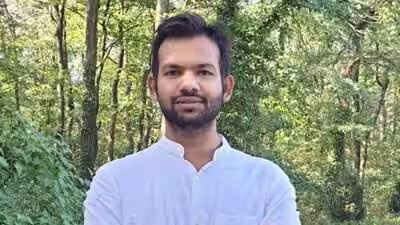
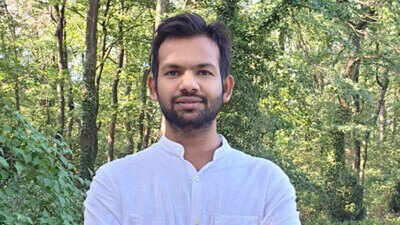
The Indian Institute of Technology (IIT) Roorkee has announced that Prof. Ankit Agarwal of its Department of Hydrology has been selected for the National Academy of Sciences, India (NASI) Young Scientist Award 2026. The institute shared the announcement on August 4, stating that the award recognises his scientific contributions and research leadership.According to IIT Roorkee, the honour also includes a research incentive to support future scientific work. The institute congratulated Prof. Agarwal and wished him continued success in his research career.
Academic career at IIT Roorkee
Prof. Agarwal has been serving as an Associate Professor in the Department of Hydrology at IIT Roorkee since September 2025. He joined the institute as an Assistant Professor in October 2019 and has been involved in teaching and research in hydrology and related disciplines.• IIT Bombay’s Prof. Karthikeyan Lanka selected for NASI Young Scientist Award 2026Apart from his academic responsibilities, he serves on the editorial boards of several international journals. These include Journal of Hydrology published by Elsevier, Hydrological Sciences Journal of the International Association of Hydrological Sciences, Scientific Reports published by Nature Research, Weather, Climate, and Society of the American Meteorological Society, and Natural Hazards and Earth System Sciences.
Research and educational background
Before joining IIT Roorkee, Prof. Agarwal worked as a postdoctoral scientist at the Potsdam Institute for Climate Impact Research and the Helmholtz Centre Potsdam, German Research Centre for Geosciences, in Germany.He completed his doctoral research at the University of Potsdam between 2015 and 2018 under the “Natural Hazards and Risks in a Changing World (NatRiskChange)” graduate programme. His research focused on hydrology, climatology and the analysis of natural hazards. During the same period, he was also associated with the Potsdam Institute for Climate Impact Research.Prof. Agarwal earned a master’s degree in Hydrology and Water Resources Science from the Indian Institute of Technology Delhi between 2013 and 2015. He completed his bachelor’s degree in Civil Engineering from MBM Engineering College, Jodhpur.The National Academy of Sciences, India presents the Young Scientist Award annually to recognise early-career researchers for their scientific contributions and potential for future research. The award also provides research support to encourage continued work in their respective fields.
NASI Young Scientist Award 2026 recipients
• Dr. Akanksha Singh (CSIR-CIMAP): Her award-winning research focuses on crop protection and production. At the Central Institute of Medicinal and Aromatic Plants (CIMAP), she works on biological solutions to agricultural stress, improving crop yield, and enhancing the resilience of economically important medicinal plants.• Dr. Anindita Das (IACS Kolkata): Recognized in the Applied and Interdisciplinary Sciences domain, her research focuses on smart materials and molecular assemblies. She combines chemistry and materials science to develop functional molecular structures with potential applications in energy and bio-interfacing technologies.• Dr. Antara Banerjee: Her research emphasizes scientific leadership and translational biology. She focuses on niche therapeutic applications and biomedical innovations, bridging laboratory-scale cellular biology with impactful public healthcare solutions.• Dr. Akshay Singh (IISc Bengaluru): Based in the Department of Physics, his research explores the fundamental properties of two-dimensional (2D) quantum materials. He uses ultrafast optical spectroscopy to study excitons and spin dynamics, advancing next-generation quantum computing and nanoscale optics.• Dr. Ashutosh K. Singh (CeNS): At the Centre for Nano and Soft Matter Sciences (CeNS), his research bridges nanomaterials and soft matter engineering. His work focuses on responsive optoelectronic materials and functional thin films for energy-harvesting applications.• Prof. Karthikeyan Lanka (IIT Bombay): Associated with the Centre of Studies in Resources Engineering, his research focuses on satellite remote sensing and geographic information systems (GIS). His modelling frameworks assess natural resources and monitor environmental changes under changing climate conditions.• Dr. Shubham Sahay (IIT Kanpur): A faculty member in the Department of Electrical Engineering, his research centers on nanoelectronics and semiconductor devices. He develops hardware architectures for neuromorphic computing, enabling low-power memory arrays for artificial intelligence.• Dr. Vishal Govind Rao (IIT Kanpur): Based in the Department of Chemistry, his research advances single-molecule spectroscopy and photochemistry. His laboratory studies how nanocrystals interact with light, opening new possibilities for solar energy conversion and chemical sensing.• Dr. Soumya Prakash Dash (IIT Bhubaneswar): Affiliated with the School of Electrical and Computer Sciences, his research focuses on wireless communications and signal processing. His work contributes to optimizing architectures for 5G-Advanced and future 6G communication networks.