


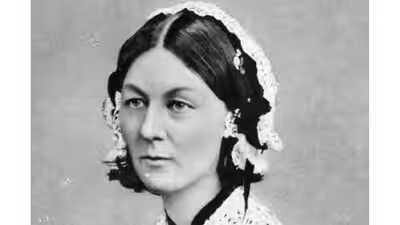
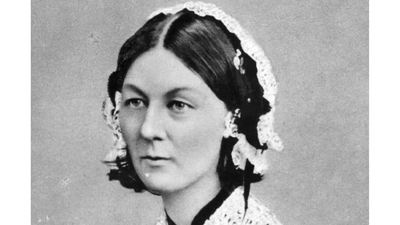
Florence Nightingale, widely remembered as the “Lady with the Lamp”, became one of the most influential figures in the history of nursing and healthcare. Born in 1820, she challenged the expectations placed on women of her time and devoted her life to improving the treatment of sick and injured people. Her work during the Crimean War brought her international recognition, but her influence extended far beyond the battlefield hospitals where she first became famous. Nightingale campaigned for cleaner hospitals, better sanitation, improved nursing education and more effective healthcare administration. She also used statistics to demonstrate the causes of deaths among soldiers and to argue for reforms. Her philosophy of practical action is reflected in the quote: “So never lose an opportunity of urging a practical beginning, however small.” The words offer a simple but powerful reminder that meaningful change often starts with one small step.
Quote of the day by Florence Nightingale
“So never lose an opportunity of urging a practical beginning, however small.”The quote captures Nightingale’s belief that progress should begin with practical action, even when the first step appears insignificant. Rather than waiting for perfect conditions or attempting to solve an enormous problem all at once, she encouraged people to begin wherever they could. A small improvement could create momentum and eventually lead to a much larger transformation.The idea was particularly relevant to Nightingale’s own life. She entered nursing at a time when the profession did not enjoy the status or training associated with it today. During the Crimean War, she encountered military hospitals where soldiers faced overcrowding, poor sanitation, inadequate supplies and insufficient medical care. Instead of accepting those conditions, she pushed for practical improvements in cleanliness, food, supplies and organisation.
What did Florence Nightingale mean by the quote?
Nightingale’s words suggest that people should not underestimate the importance of a beginning simply because it is small. A large problem can often appear impossible when viewed as a whole. However, identifying one practical measure that can be implemented immediately can provide the foundation for further progress.The message also carries an element of urgency. The phrase “never lose an opportunity” suggests that useful opportunities should not be ignored simply because the solution available at that moment is limited. Taking action can be more valuable than endlessly waiting for a perfect solution.In modern life, the same principle can apply to education, work, science, healthcare and personal goals. Learning one new skill, making one improvement at work or beginning one difficult project may seem insignificant at first. Yet those actions can become the foundation for much greater achievements.
Florence Nightingale’s early life and decision to become a nurse
Nightingale was born in Florence, Italy, in 1820 into a wealthy British family. Her decision to pursue nursing was controversial because nursing was not regarded by her family and wider society as a respectable profession for a woman of her social background.Despite opposition, she pursued training and eventually became superintendent of a hospital for women in London. Her experiences strengthened her belief that nursing could be improved through education, organisation and disciplined standards.Her determination to pursue a profession that many around her considered unsuitable provides an early example of the philosophy reflected in her famous quote. She did not wait for nursing to become an established profession before trying to improve it. She became part of the process that helped transform it.
Her work during the Crimean War
Nightingale’s most famous chapter began during the Crimean War. On 4 November 1854, she arrived at Scutari in modern-day Istanbul with 38 nurses from England. The military hospital was in extremely poor condition, with inadequate supplies, overcrowding and serious sanitation problems.Nightingale and her nurses worked to improve the conditions. They helped establish laundries for cleaning linen and clothing and kitchens for preparing food. These changes were part of broader efforts to improve sanitary and medical arrangements at the hospital. The National Archives notes that these reforms contributed to a reduction in the death rate at Scutari.Her work demonstrated the principle contained in her quote. The problems facing the hospital were enormous, but improvements could begin with practical measures such as cleanliness, food and organisation.
Nightingale was also a statistician
Nightingale’s influence was not limited to bedside nursing. She was also an accomplished statistician who used data to support healthcare reform. In 1858, she became the first woman to be admitted to the Royal Statistical Society.She used statistical diagrams to show that disease was responsible for a large proportion of deaths among soldiers in military hospitals. Her work helped communicate the importance of sanitation, nutrition, ventilation and better living conditions to policymakers.This aspect of her career is particularly important because it shows how practical action can be supported by evidence. Nightingale did not simply argue that hospitals needed improvement. She gathered information and used statistics to demonstrate why changes were necessary.
How she helped transform nursing
Nightingale continued working for healthcare reform after returning from the Crimean War. She published Notes on Nursing in 1859, a book that helped explain principles of nursing and patient care to a wider audience.In 1860, she established the Nightingale School and Home for Nurses at St Thomas’ Hospital in London. The institution helped establish a model of formal nursing education and played an important role in the development of professional nursing.Her influence extended beyond Britain as ideas about nursing education and hospital standards spread internationally. Her work helped shape the development of modern nursing and contributed to wider discussions about public health and hospital reform.
Why Florence Nightingale’s quote remains relevant
More than a century after Nightingale’s death in 1910, her message about making a practical beginning remains relevant. People often avoid starting something because the first step seems too small to make a meaningful difference. Nightingale’s words challenge that mindset.Her own career demonstrates the principle. She faced resistance when she chose nursing, confronted terrible conditions during the Crimean War and spent decades campaigning for improvements in healthcare. Many of those changes began with relatively practical measures, from better sanitation and food to organised nursing education and the use of statistics.The quote therefore carries a simple lesson: a small beginning should not be dismissed simply because it is small. What matters is taking the opportunity to begin and allowing that first step to create the possibility of something larger.


