


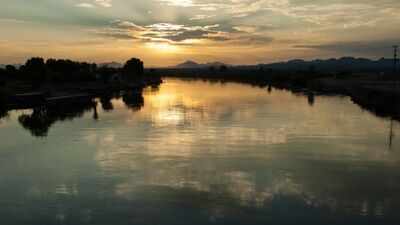
A 55-acre stretch along the Colorado River looked very different in 2009, when invasive salt cedar covered much of the floodplain at Cibola National Wildlife Refuge. River Partners began clearing the invasive forest and planting native trees, shrubs and herbs to bring back a more natural riverside habitat. The restoration was then given time to develop with limited intervention. When the conservation group returned in November 2020, the landscape had changed substantially. Native vegetation had become dominant, while birds, mammals and other wildlife were once again making use of the restored habitat.
Turning 55 acres of invasive forest along the Colorado river into a native habitat
The restoration began as a relatively small experiment within a much larger conservation effort. In 2005, the US Department of the Interior and representatives from California, Arizona and Nevada signed the Lower Colorado River Basin Multi-Species Conservation Program. That programme aimed to restore 8,100 acres of riverside habitat between Hoover Dam and the US-Mexico border over 50 years.By January 2009, River Partners had developed its first pilot project in the region. The 55-acre site at Cibola National Wildlife Refuge was surrounded by large areas dominated by salt cedar, making it a useful place to test restoration methods developed through earlier work in California. River Partners received partial funding from a US Fish and Wildlife Service Wildfire Recovery grant.The site also presented difficult conditions. It lies about 20 miles southwest of Blythe, California, where summer temperatures can reach 120°F and annual rainfall is only about 2 inches, with much of that rain arriving in February and August. Instead of trying to recreate a lush landscape, the restoration team selected plants suited to the northern Sonoran Desert.Honey mesquite trees, along with salt-tolerant shrubs and herbs, were planted to establish a woodland-like habitat that could survive the harsh environment.
What happened after the restoration was left to develop for 10 years
The results became clearer over the following decade. According to River Partners, the site gradually developed its own native plant community, with about 9 dominant species establishing themselves without salt cedar among them.The change was particularly significant because salt cedar had previously controlled the landscape. River Partners explains that the invasive tree can lower the water table, concentrate salt near the soil surface, increase fire intensity and reduce plant diversity. It can also remove habitat that birds and fish depend on. The organisation notes that more than one million acres across the American West have been lost to salt cedar.By the 2020 visit, the restored area was dominated by native honey and screw bean mesquite, catclaw, blue palo verde, big saltbush, four-wing saltbush, cattle saltbush, arrowweed, desert broom, creosote bush and Anderson thornbush. The contrast extended beyond the project boundary, where thousands of acres upstream and downstream remained largely covered by salt cedar. The restoration therefore produced a distinct patch of native vegetation within a much more uniform landscape.
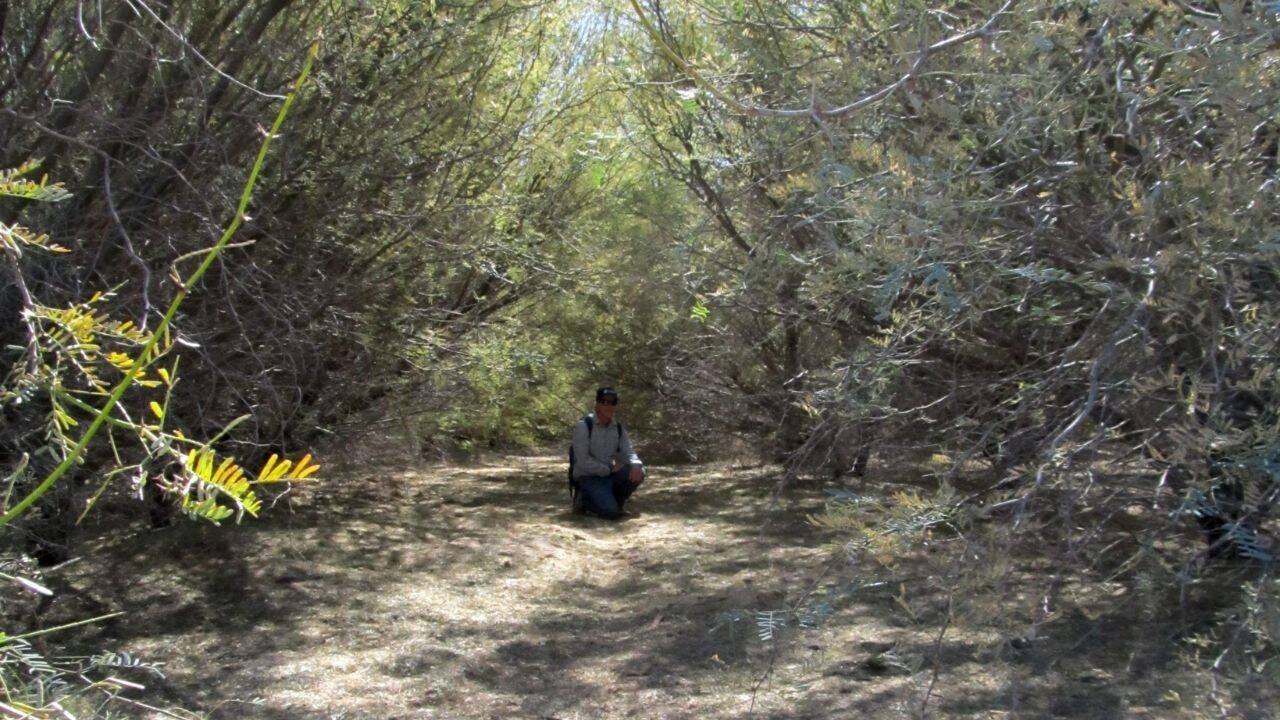
River Partners team member poses under the mature mesquite woodland canopy. Image Credit: River Partners
Wildlife started using the restored native landscape
The return of plants was followed by signs that animals were making use of the new habitat. River Partners reported that the mesquite trees had grown vigorously and were producing large quantities of seed.That seed production appears to have supported more small vertebrates, which then provided food for larger predators. Owls, raptors, coyotes, badgers and other predators were observed using the restored area. The developing woodland also offered deer food and shelter, while its trees created a cooler environment in the desert.Birds were another important part of the recovery. Numerous species were using the site for nesting and feeding, including loggerhead shrikes, a species of special concern. The vegetation was therefore doing more than simply replacing the invasive trees. It was creating different layers of habitat that could support animals with different needs.The changes also showed why the choice of native plants mattered. Instead of establishing a single replacement species, the project created a mixture of trees, shrubs and herbs that could provide food, shade and cover across the site.
10-year restoration gave birth to a lasting habitat recovery
Only 9 salt cedar trees were identified within the restoration site during the visit. River Partners reports that this reduced the need for refuge managers to spend public money on weed control and eradication.The 55-acre Cibola site shows how a restoration project can begin on a relatively small scale and still produce noticeable ecological changes. Instead of requiring continuous intensive management, the restored area had developed into a functioning native woodland after the initial planting work.The result also provided a practical test of River Partners’ restoration approach under the difficult conditions of the lower Colorado River.The Cibola project was intended as more than an isolated effort. River Partners has identified the New and Alamo Rivers in Imperial County as places where a similar approach could be applied. The aim would be to restore native river landscapes that can support wildlife and remain productive over the long term.


