


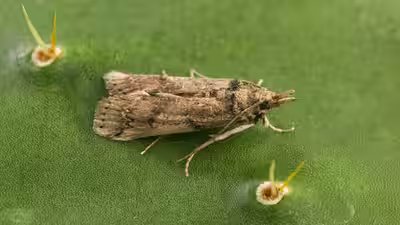
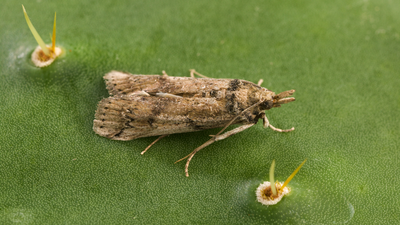
An invasive South American moth that was once released as a biological control agent in the Caribbean is now spreading across the southern United States, creating a serious ecological and economic threat to native prickly pear cactus populations. The insect, Cactoblastis cactorum, commonly known as the Argentine cactus moth, was first detected in Florida in 1989. According to research published by the University of Florida Institute of Food and Agricultural Sciences (UF/IFAS Extension) and the United States Department of Agriculture’s Agricultural Research Service (USDA-ARS), the moth has since moved along the Gulf Coast and established breeding populations in Georgia, Alabama, Mississippi, Louisiana and parts of Texas.Native to South America, the species became well known in the mid-20th century for its success as a biological control agent. In Australia during the 1920s and 1930s, the moth was deliberately released to control invasive prickly pear species (Opuntia). The effort helped reclaim tens of millions of acres of farmland that had been covered by the plants. After Australia’s success, agricultural authorities released the moth on several Caribbean islands, including Nevis, Saint Kitts, Antigua and Montserrat, beginning in 1957. The aim was to remove thick prickly pear growth and create more land for cattle grazing and farming. However, the moth did not stay on the islands where it was released. It spread naturally between islands and was also moved by people and trade. It eventually reached Cuba and the Bahamas before arriving in Florida.
How the moth destroys cactus plants
Most of the damage is caused by the moth during its larval stage. Female moths lay distinctive “egg sticks” on the spines or pads of prickly pear plants. The egg sticks look like small cactus thorns and contain dozens of eggs. After hatching, the bright orange and black caterpillars enter the cactus pads and begin feeding on the tissue inside. The larvae often feed together, eating the plant from the inside out. As the tissue is destroyed, the cactus pads become hollow and translucent, with dark waste material and decaying plant matter inside. The damage also leaves the cactus open to bacterial and fungal infections. Eventually, the entire plant can weaken, collapse and die. Documents from the Florida Department of Agriculture and Consumer Services (FDACS) say Cactoblastis cactorum attacks almost all species in the Opuntia genus. In Florida, this has created particular concern for rare and endangered native cacti. One of the species at risk is the semaphore cactus (Opuntia corallicola), which already had a very limited range before the moth arrived.
Growing threat to Southwest and Mexico
As the moth continues moving west, scientists and wildlife officials are increasingly concerned about its possible impact on ecosystems in the southwestern United States and Mexico. In the dry regions of the American Southwest and northern Mexico, prickly pear cacti play an important role in the ecosystem. They help reduce soil erosion, hold moisture in the ground and provide food and shelter for wildlife such as deer, javelinas, desert tortoises and many bird species. The pest also presents a major economic concern because of its proximity to Mexico. Prickly pear, known locally as nopal, is an important crop in Mexico. It is grown across tens of thousands of hectares for food, livestock feed and commercial products such as cosmetics. USDA Agricultural Research Service reports have warned that an uncontrolled spread into Mexico could threaten farming communities and food supplies that depend on commercial nopal production.
Efforts to control the moth
Federal and state agencies have introduced several measures to slow the spread of the pest, according to FDACS and USDA documents. One of the main methods is the Sterile Insect Technique (SIT). The programme was developed by USDA-ARS scientists working with international nuclear and plant health organisations. Under the method, male moths are raised in laboratories and exposed to low doses of gamma radiation, which makes them sterile. Thousands of these sterile males are then released in areas where the moth is spreading, including the Texas barrier islands. When sterile males mate with wild females, they produce no viable offspring. This can reduce the number of moths in an area and slow population growth. Researchers are also studying natural predators and parasitoids from South America that could attack the cactus moth without harming other native insects. Officials use pheromone traps and regular inspections to monitor the moth’s spread. They are also urging nurseries, landscapers and home gardeners to check prickly pear plants for egg sticks and signs of larval damage. The goal is to prevent people from accidentally carrying the invasive moth into areas where it has not yet arrived, while researchers continue looking for ways to stop its westward advance.


