


Snakebite envenomation(condition where toxic venom is injected into a body via the bite, sting, or puncture of a venomous animal such as a snake, spider, scorpion, or insect), remains a global health issue, causing up to 100,000 deaths per year and affecting millions of people. For over a century, the primary medical solution for these injuries has been the ‘snake antivenom immunoglobulins.’ These life-saving treatments consist of purified antibodies for neutralising the complex toxins found in snake venom.Interestingly, the production of these medicines depends entirely on the biological systems of large mammals, most commonly horses. Despite advancements in medical science, the fundamental principles of antivenom manufacturing have remained consistent since the late 19th century. Today, antivenom is recognised by the World Health Organisation(WHO) as an essential medicine that must be available in any primary healthcare package. Understanding how this medicine is produced highlights the important connection between human health and the animals that help.
How is the life-saving antivenom produced by horse blood
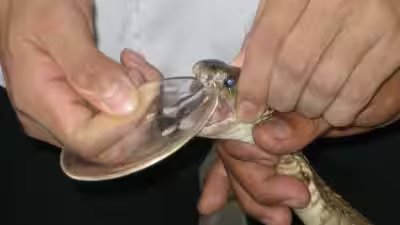
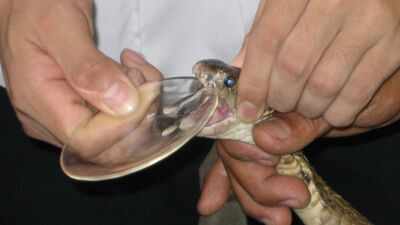
The production process begins with the collection of venom. As detailed in the Eurasian Journal Emergency medicine, snakes are quarantined for at least two months before being ‘milked’ to extract their toxins. This venom is then prepared with substances called adjuvants, which help stimulate the horse’s immune system without causing severe harm. The WHO Guidelines state that these small, diluted volumes of venom are injected in the neck area where the lymphatic system can process them to create antibodies.Over several weeks or months, the horse develops a peak immune response. Once antibody levels reach a satisfactory level, plasma is collected from the animal’s jugular vein. Modern facilities use a process called plasmapheresis, where the blood is passed through an automated machine to separate the plasma while immediately returning the red blood cells to the horse. It helps prevent the animal from becoming anaemic and allows for more frequent collections while maintaining the overall health.
Why horse blood is essential in making antivenom
According to the Eurasian Journal, the first successful antivenom therapy was developed in 1895 by Albert Calmette, who separated serum from the blood of horses that had been exposed to cobra venom. The WHO Guidelines explain that ‘horses’ are preferred for this work because they are large enough to provide substantial amounts of plasma and possess robust immune systems capable of developing strong antibodies.Because these animals are ‘hyperimmunised’(they are given controlled, increasing doses of venom over time) their blood becomes a rich source of the immunoglobulins needed to fight the poison. A single horse can provide between three and six litres of blood in a single session. This large volume makes the industrial production of antivenom feasible on a scale that can meet the needs of large populations. Furthermore, the International Animal Health Journal notes that equine blood has functioned as an essential raw material in this industry for over 130 years, proving the horse’s long-standing role as a vital contributor to modern immunology.
What is the process of purifying the plasma
Once the plasma is collected, it must undergo extensive purification to become safe for human use. The WHO Guidelines explain that ‘antivenom immunoglobulins’ is the preferred term for the final product, instead of serum. This process involves removing various proteins and impurities that could cause adverse reactions in human patients.There are different scientific methods to achieve this, such as using pepsin or caprylic acid to isolate the neutralising fragments. The goal is to produce a concentrated solution of antibodies that is stable and effective. After purification, the antivenom is formulated into a liquid or freeze-dried form, bottled in sterile conditions, and goes through rigorous quality control tests. The Eurasian Journal highlights that before any batch is released, its potency must be assessed to ensure it can successfully neutralise the venom.
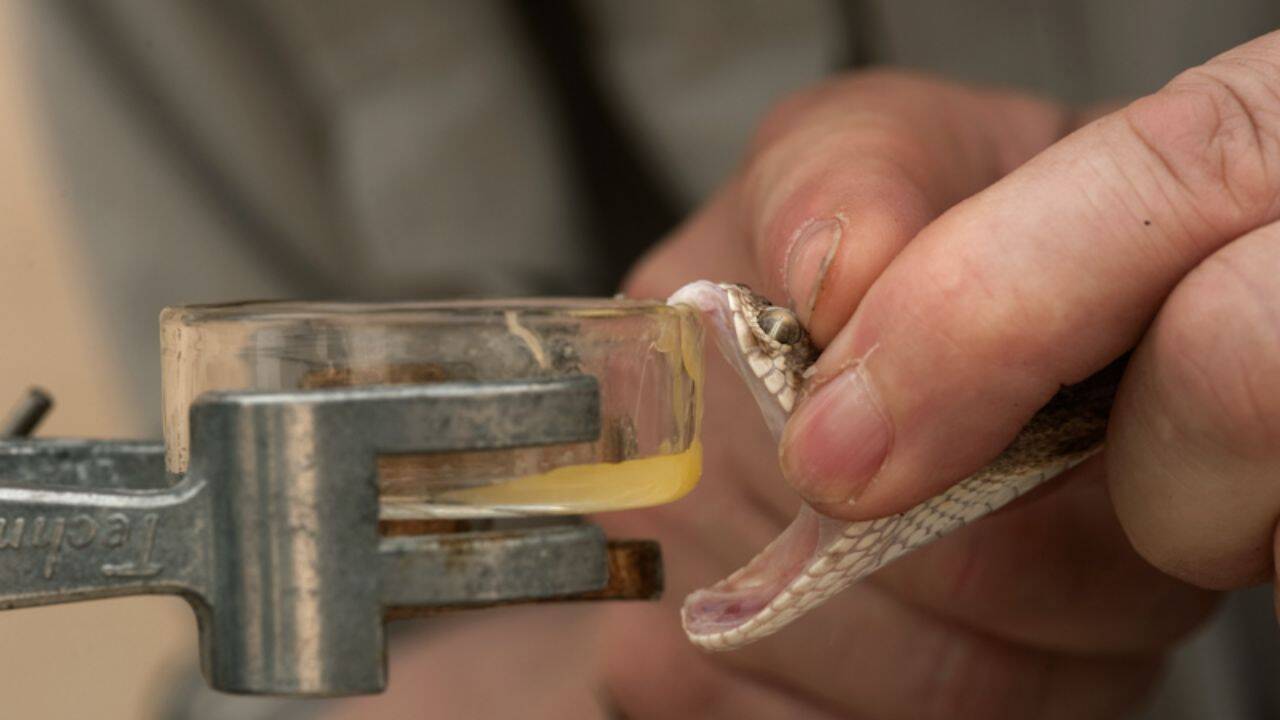
Venom extraction. Image Credit: Wikimedia commons
Ethical concerns regarding the use of horses in venom production
While horses are essential for producing this medicine, their role as ‘material assets’ has raised significant ethical questions. The International Animal Health Journal argues that the equine contribution to medicine has often been overlooked, with horses treated as tools for production rather than sentient beings. The journal highlights a lack of international standards about the maximum limit of blood that can be extracted or the frequency of collection allowed.Repeated injections of toxins and large-volume bloodletting can lead to painful physical conditions, for example ‘ulcers’ at injection sites and liver or kidney failure. Furthermore, horses naturally hide their pain as a survival tactic, making it difficult for handlers to recognise the suffering. To address this, the 2016 WHO Guidelines introduced recommendations for improved animal welfare, including regular veterinary evaluations and the requirement for cause of death to be available for external review.The global demand for antivenom is growing and so is the pressure to find a sustainable method to produce antivenoms. For now, the use of horses remains the global standard for producing antivenom. The WHO Guidelines insists on following ‘Good Manufacturing Practices’ and maintaining high standards of animal welfare to ensure a steady supply of medicine.


