


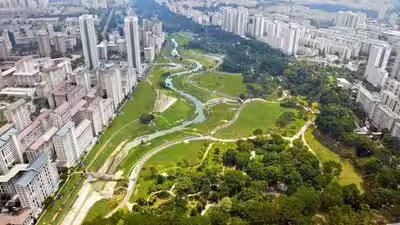
In 2012, Singapore turned a major urban drainage channel into natural-like river. The project was part of Singapore’s Active, Beautiful, Clean (ABC) Waters Programme.According to Water Online, a 2.7-km section of the Kallang River at Bishan-Ang Mo Kio Park was transformed into a 3-km winding waterway, with landscaped banks, plants and a flood plain.The work was carried out between 2009 and 2011. Instead of keeping the river a straight concrete canal, meandering shape was introduced. Plants, rocks, natural materials and civil engineering methods were also used to soften its edges. The aim was not only to change how the waterway looked but also to improve its ecological condition and manage storm water.As a result, the river created space for plants and animals. A 2012 project announcement said the new river had recorded a 30% increase in biodiversity even before construction was completed. Later research published in Ecological Engineering studied the waterway in detail and found that the rehabilitated section had more fish species and a higher share of native fish than an untreated canal section downstream.The study looked at the Kallang River at Bishan-Ang Mo Kio Park several years after the rehabilitation. Researchers compared the fish community there with an unrehabilitated section of the Kallang Canal. Their findings showed that the new river had also developed a different and more varied fish community, although non-native fish still remained dominant.
From canal to river
The Kallang River section at Bishan-Ang Mo Kio Park had originally been built as a concrete canal. It was part of Singapore’s large network of drains and canals used to manage storm water in a highly urbanised environment.Between 2009 and 2011, the 2.7-km canal was rehabilitated and naturalised. It became a 3-km meandering river with a flood plain.The river banks were changed using a combination of plants, natural materials and civil engineering techniques. The project also used soil bioengineering to help stabilise the banks. It used vegetation and other natural materials along with engineering methods to hold soil in place and reduce erosion.The design was also meant to cope with heavy rainfall. During a major downpour, water can spread across the flood plain rather than being confined to a narrow channel. The wider area and vegetation create friction, which slows the movement of water and helps reduce the pressure on the river farther downstream.Thus the park could serve more than one purpose- provide open space for recreation during normal conditions while also acting as a flood plain when large amounts of rainwater entered the system.
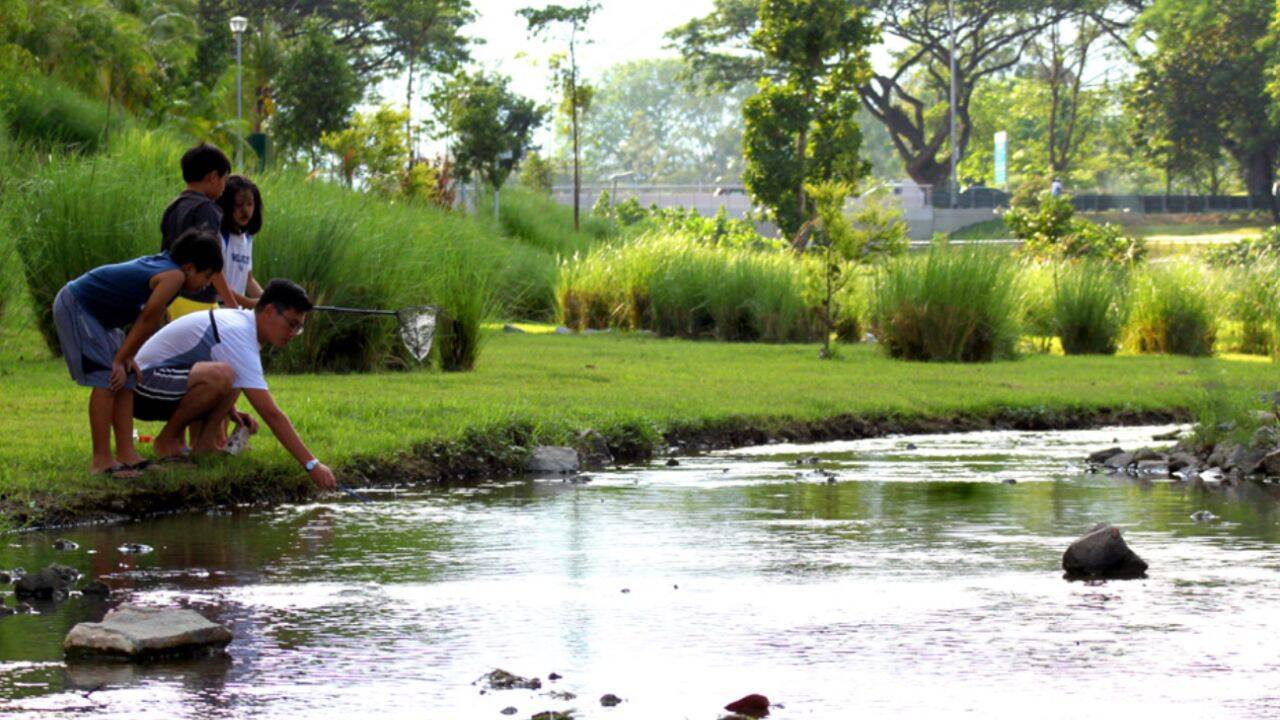
The rehabilitated waterway supported more fish species and a higher percentage of native species.
Fish population increase
The later scientific study examined whether the rehabilitation had actually changed the aquatic community. Researchers surveyed fish and environmental conditions in the rehabilitated section between 2016 and 2018.According to Science Direct, they recorded 8,325 individual fish belonging to 26 species in the rehabilitated waterway. Three of those species were native to Singapore. In comparison, the unrehabilitated Kallang Canal had eight non-native fish species recorded, with no native species found in the survey data cited by the researchers.Also, fish species richness was significantly higher in the rehabilitated section. The percentage of native fish was also significantly higher there than in the unrehabilitated canal.However, the rehabilitation did not result in a waterway dominated by native fish. The fish community was still mainly made up of non-native species.Two non-native groups were particularly common in the rehabilitated river. Quetzal cichlid accounted for 68% of the fish recorded, while tilapia accounted for 17%.
A better habitat
The researchers link the difference partly to the greater variety of habitats created by the rehabilitation. The old concrete canal offered a much simpler environment, while the rehabilitated river had more complex physical features.The project added plants and natural materials and changed the straight canal into a winding river. These changes created spaces within the waterway that could be used by aquatic organisms.There were also differences in environmental conditions between the rehabilitated and unrehabilitated sections. The fish community in the rehabilitated river was more similar to that of the upstream reservoir than to nearby natural forest streams.This was important because the rehabilitation did not simply recreate a natural forest stream. Instead, it created a new type of urban freshwater environment with its own combination of physical conditions and aquatic species.


