











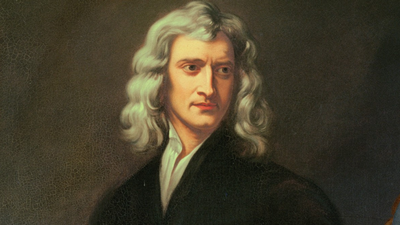
Isaac Newton, one of history’s most influential scientists, spent much of his life trying to understand the laws governing the natural world. His work transformed physics, mathematics and astronomy, but his approach to discovery was rooted in careful observation, experimentation and the search for underlying principles. One of his enduring observations was that truth is often easier to find when complexity is reduced rather than multiplied. His words, “Truth is ever to be found in simplicity, and not in the multiplicity and confusion of things,” remain relevant far beyond science. They offer a reminder that complicated problems do not always require complicated explanations. Sometimes, understanding comes from identifying the essential idea beneath layers of information, assumptions and distractions.
Quote of the day: Isaac Newton on simplicity and truth
“Truth is ever to be found in simplicity, and not in the multiplicity and confusion of things.”— Isaac NewtonNewton’s quote expresses a principle that was central to the scientific revolution. Rather than accepting a collection of disconnected observations, scientists sought broader rules that could explain them. Newton himself demonstrated this approach through his work on motion and gravity, developing mathematical laws that could describe phenomena occurring both on Earth and in the heavens. The quote suggests that adding more ideas does not necessarily bring us closer to the truth. Instead, clarity can emerge when seemingly complicated observations are brought together through a simple underlying principle.
Why simplicity mattered to Newton
Newton worked during a period when scientists and philosophers were challenging older explanations of how nature worked. His Philosophiæ Naturalis Principia Mathematica, published in 1687, presented his laws of motion and universal gravitation and became one of the foundations of classical physics. His achievement was not simply that he made observations, but that he developed mathematical principles capable of explaining a wide range of physical phenomena. The approach reflects the idea behind his quotation. A powerful scientific explanation can sometimes replace a confusing collection of separate explanations by revealing a common rule that connects them.
Simplicity does not mean ignoring complexity
Newton’s words should not be interpreted as saying that every problem has an easy answer. Nature can be extraordinarily complicated, and Newton himself acknowledged the difficulty of explaining the natural world completely. His statement is better understood as an argument for seeking clarity rather than unnecessarily complicating an explanation. In science, a simple principle can have enormous explanatory power while still describing complicated phenomena. The challenge is determining which details are essential and which merely obscure the underlying pattern. That distinction remains important today, when people encounter enormous amounts of information from scientific research, technology and digital media.
A lesson that extends beyond science
The idea also applies to everyday decision-making. People often face situations filled with competing opinions, statistics, assumptions and distractions. More information can sometimes make a decision harder rather than easier. Newton’s observation encourages people to step back and ask what the central issue really is. Removing unnecessary complexity can reveal relationships that were difficult to see before. Whether the subject is science, education, business or personal choices, finding the simplest explanation that accurately reflects reality can be more useful than creating an elaborate explanation filled with unnecessary details.
Newton’s influence on modern science
Newton’s scientific legacy extends far beyond this single observation. His three laws of motion and theory of universal gravitation provided a framework that shaped physics for centuries and influenced later scientific developments. His mathematical work also played a foundational role in the development of calculus, while his experiments with light and colour transformed understanding of optics. Although modern physics has expanded and revised parts of the Newtonian framework, his methods and mathematical descriptions remain fundamental in many areas of science and engineering. His influence demonstrates why the search for clear underlying principles has remained such an important part of scientific thinking.
Why the quote still resonates today
More than three centuries after Newton wrote about simplicity and truth, the idea remains relevant in a world overflowing with information. Scientific discoveries can involve thousands of observations and increasingly sophisticated models, while everyday life can bring an equally overwhelming stream of information. Newton’s words offer a simple principle for navigating that complexity: look beyond the noise and search for the underlying truth. Simplicity, in this sense, is not about ignoring difficult questions. It is about finding clarity within them.