

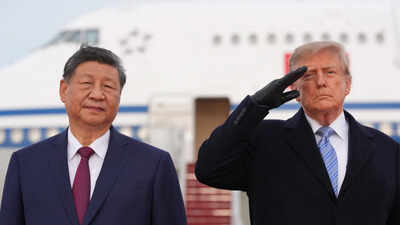
The United States and China have agreed to extend their trade truce by two months, giving US President Donald Trump and Chinese President Xi Jinping more time to manage their wider economic rivalry. This truce extension comes as Xi begins his three-day state visit to Washington.US treasury secretary Scott Bessent said the extension would keep the agreement in place until January 10, moving the deadline beyond its original November 10 expiry. The announcement came hours after Bessent held an unscheduled meeting with Chinese vice-premier He Lifeng in Washington.
A truce, but plenty left to settle
Bessent said the two sides had agreed to extend what Washington calls the “Busan Agreement” while they assess whether Beijing is delivering on its commitments. He said some Chinese commitments, particularly on rare-earth exports, had not been fully met and that the additional time would allow Washington to judge progress.The extension also followed renewed discussions about a potentially broader trade agreement. Bessent said China had proposed a “bigger deal”, while the two sides had already agreed to launch an AI dialogue and establish a bilateral trade body during their earlier talks.The truce itself had helped pull US and China back from the brink after Trump’s sweeping tariffs triggered a major trade confrontation. Under the Busan agreement, the two sides lowered some tariffs, paused additional restrictions and rare-earth export controls, and secured Chinese commitments on US soybeans and fentanyl precursors.Also read | 100-foot-long red carpet and B-1 bombers: How Trump welcomed Xi to US
Trade is only one piece of the Trump-Xi agenda
The leaders’ talks today are expected to cover Taiwan, technology, artificial intelligence and China’s relationship with Iran alongside trade. Reuters reported that Xi was likely to press Beijing’s position on Taiwan, including its objections to US arms sales, while Trump was expected to maintain US export controls.AI is emerging as another area where the two rivals may try to keep communication open despite fierce technological competition. Bessent said Washington and Beijing were working to define risks including uncontrolled AI agents and non-state actors using AI for cyber operations or biological threats. A further meeting on AI safety is expected in Shenzhen in about two months.The immediate outcome of these meetings is more likely to be a series of narrower agreements that keep the relationship stable while leaving the deeper disputes over trade, technology, Taiwan and Iran unresolved.


