



In a span of 14 days, four cases involving minor girls have put Delhi’s safety record under the scanner again. The circumstances of the incidents vary, but collectively they highlight a familiar problem: children and young women are still vulnerable in places that shouldn’t necessarily be hard to secure – a neighborhood shop, a city street, an open area and a public park.
Experts highlight gaps in prevention and surveillance
The latest case, where a 17-year-old was allegedly gang-raped by men posing as policemen in Kalkaji’s Aastha Kunj Park (South Delhi), has brought the concern sharply back into focus.
Security at Delhi parks under scanner
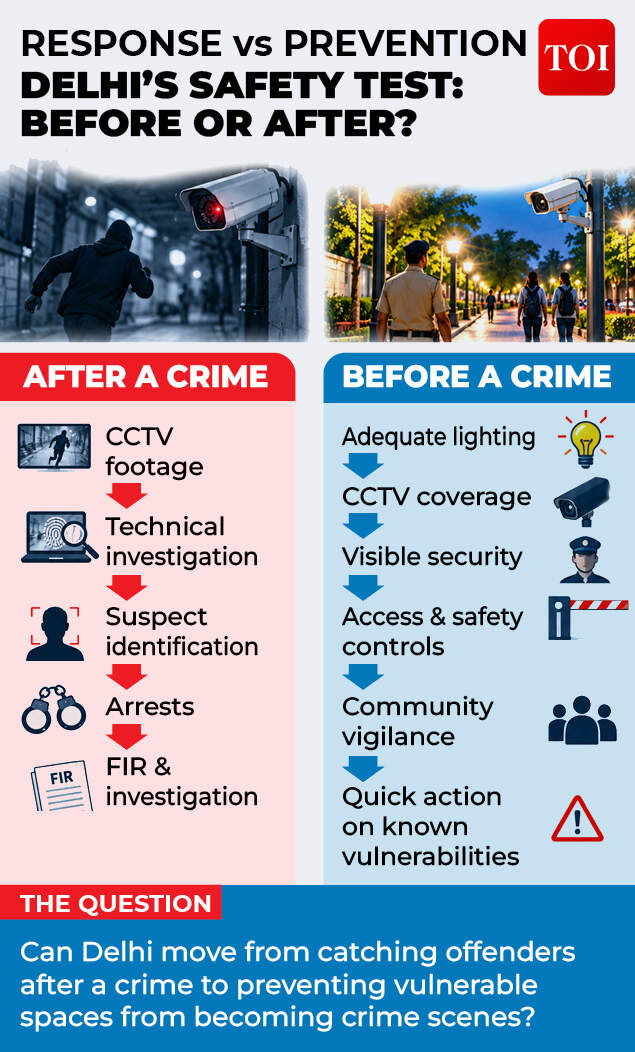
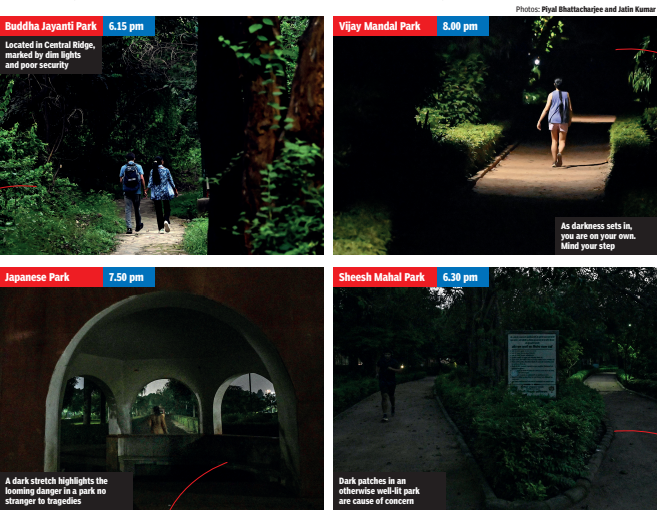
Four cases, four locations, same questionsThe four cases reported since Sept 10 involved girls aged between six and 17 years old. In Swaroop Nagar, a 17-year-old girl was allegedly gang-raped and killed after she went to meet a teenage acquaintance. Four people including three juveniles have been arrested.An 11-year-old was allegedly raped inside a shop in Sadar Bazaar when she went to buy stationery. A six-year-old was allegedly sexually assaulted on the Deshbandhu Gupta Road while a 17-year-old was allegedly attacked by three men claiming to be police personnel in South Delhi.What is striking is not one common suspect or a common method, but the variety of circumstances in which the girls were allegedly targeted. One incident took place after a meeting with an acquaintance of the victim, one in a commercial premises, one in a public locality and the latest in a park.That makes safety a bigger question than policing isolated hotspots. It raises questions about surveillance, lighting, access control, community vigilance and how quickly warnings are acted upon.Delhi’s numbers show it is not a two-week problemThe latest NCRB data gives the bigger picture. Among the 19 metropolitan cities covered in the report, Delhi reported the highest absolute numbers with 13,396 cases of crime against women including 1,058 cases of rape in 2024. The capital also registered 7,662 crimes against children in 2024, the highest among metros again. Some categories saw a slight dip in figures but the volume remains large.One more important number in the latest data — Delhi Police said the city recorded 1,901 rape cases in 2025 as against 2,076 in 2024 and 2,141 in 2023.Police also said that in 2025, 95% of murder cases were solved and 97% of rape cases were solved. One important distinction is clear from these figures: the investigation and arrests after a crime can be robust but do not answer the harder question of how vulnerable places and potential victims can be protected before an offense takes place.The difference between response and preventionThere has been a rapid response to the latest cases. In Kalkaji case, police said all three accused were arrested within around 12 hours after CCTV footage and technical inputs were examined.One suspect was injured in an encounter. In the Swaroop Nagar case, police examined footage of over 50 CCTVs and traced a suspicious tempo to zero in on the suspects. These investigations show the importance of the surveillance and quick police response following the commission of an offense.But the bigger test of safety comes before the crime. The Aastha Kunj case has already highlighted the gaps in CCTV coverage, lighting and security around the park.The Lady Shri Ram (LSR) college decision to hold classes online after the incident shows how quickly a crime in a public space can change everyday life. So the question for Delhi is not just how well suspects are caught, but whether known vulnerabilities are being fixed before they turn into crimes.Four cases in 14 days cannot be considered a new trend in Delhi’s crime rate. Each case has to be evaluated on its own. But they do give a sense of the different ways that minors can fall into trouble in the city.The arrests are important, so do the FIRs and the probes. But the real test of safety will be whether Delhi can ensure that its neighborhoods, streets, commercial areas and public spaces are safe enough that police intervention is required before, rather than after, a child becomes a victim.


