








Headlines

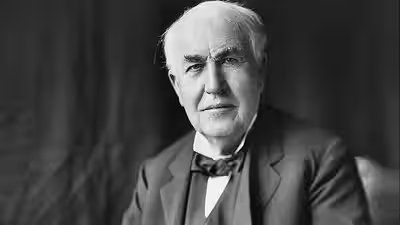
Quote of the day by Guglielmo Marconi: “Have I done the world good, or have I added a menace?”

Quote of the day by Guglielmo Marconi/Image: AI Generated Two inventors can build something genuinely new and end up asking very different questions about it afterwards. One asks only whether it worked, whether it sold, whether it earned money or recognition, and stops there, satisfied. The other asks a harder question years later, once the…

Read More

By 2060, discarded solar panels could total 297 to 402 million tonnes worldwide; recycling them could generate almost $1 trillion in economic benefits

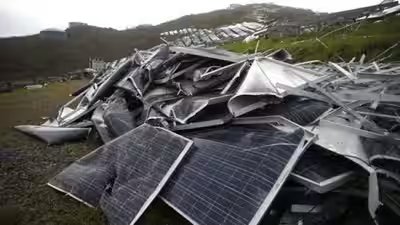
Solar Panel Waste: The Unknown Side of Solar Power Discarded solar panels could become a major global waste problem, with as much as 402 million tonnes of photovoltaic (PV) waste expected by 2060. But if these panels are recycled properly, the materials inside them could create almost $1 trillion (£770 billion) in economic value.According to…

Read More

Organisms living inside the gut of psychopaths could be the drivers of bad, sinful behaviour and conduct, claim scientists

In one of the first studies of its kind, scientists have claimed that the organisms living inside the gut of psychopaths may be the drivers of their peculiar behaviour. The research team has claimed that they have discovered a link between the specific balance of microflora in the gut and psychopathic behaviour.As detailed in the…

Read More

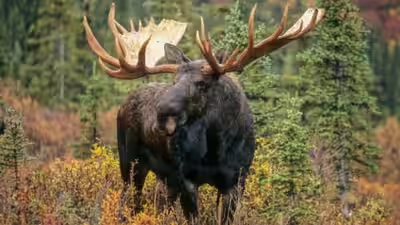
Newfoundland introduced moose in 1878, today, the population of 11,000 is on the verge of eradicating the island’s forests

Newfoundland introduced moose for food in the region more than a century ago. Today, about 110,000 of their population are reshaping the island’s forests, eradicating them slowly. Initially, the animals had been brought in as a dependable source of meat, but the expansion of the herd has unleashed somewhat of an ecological juggernaut on the…

Read More

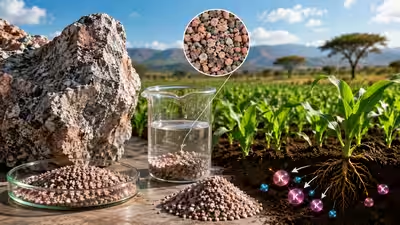
Scientists unlock potassium from Morocco’s syenite rock to create a slower-release fertiliser for African crops

Food insecurity remains a daily reality for more than 300 million people across Africa, and the high cost of imported potassium fertiliser is part of the problem. Nearly all of the world’s potash is mined in Canada, Russia and Germany, leaving African farmers reliant on expensive, distant supply chains and a fertiliser that leaches quickly…

Read More

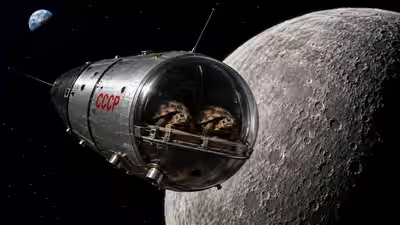
In 1968, two Soviet tortoises circled the Moon and returned alive, completing the journey three months before Apollo 8

In September 1968, three months before Apollo 8 carried the first humans around the Moon, two Central Asian steppe tortoises had already made the same journey and returned home alive. According to Nasa, the tortoises launched aboard the Soviet Union’s Zond 5 spacecraft from the Baikonur Cosmodrome, travelling alongside wine flies, worms and plants as…

Read More

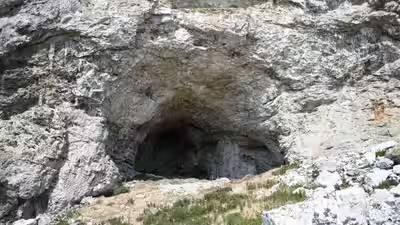
Archaeologists found a young woman, believed to be 14 to 19, buried with a 32-to 34-week fetus in a Swedish cave; the remains may be up to 9,500 years old

On a small island off the coast of Sweden, a tragedy lay buried for thousands of years, hidden in the depths of a cave. Buried under ancient sediment, were the bones of a young woman and a fetus, estimated to be around 32 to 34 weeks of gestation.The shocking discovery was made by archaeologists in…

Read More

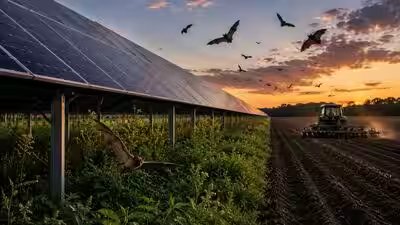
Bat activity jumped 50% over Midwest solar farms as farmers planted nearby fields, and researchers think vegetation beneath panels may be the reason

Spring changes the sound of the countryside. Fields that have spent the winter covered in crop residue are opened up, machinery moves across the soil and much of the vegetation disappears within days. For bats hunting after sunset, that seasonal shift can alter where food is easiest to find.That became apparent in a two-year monitoring…

Read More

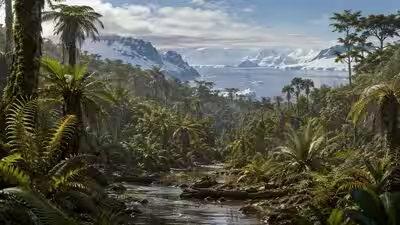
Antarctica once had a rainforest just 900 km from the South Pole. Fossil roots reveal how warm it was 90 million years ago

A sediment core pulled from the seabed off West Antarctica has preserved evidence of a forest that grew near the South Pole about 90 million years ago, when the continent was warm enough to support a wet, temperate ecosystem. The core contains fossilised roots, pollen and spores from vegetation that lived at a latitude of…

Read More