







Headlines

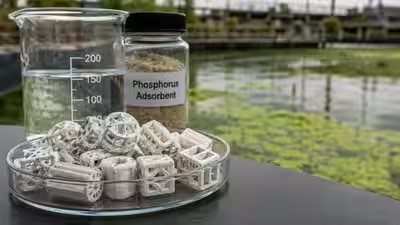
Florida Atlantic University received $600,379 grant to develop 3D-printed adsorbents that remove phosphorus and combat harmful algal blooms |

Harmful algal blooms can turn freshwater ecosystems into dangerous environments, but researchers at Florida Atlantic University are developing a novel way to tackle one of the nutrients that helps drive them, excess phosphorus. Rather than removing algae after a bloom has already formed, the team is developing 3D-printed adsorbent structures designed to capture phosphate directly…

Read More

Scientists found the world’s fastest star moving at 15,500 miles per second, over 8% the speed of light, and it could test Einstein’s theory |

Astronomers have found what is currently the fastest known star in the Milky Way, a faint star racing through the extreme environment around Sagittarius A*, the supermassive black hole at the centre of our galaxy. Called S301, the star reaches a staggering speed of about 15,500 miles per second, or 25,000 kilometres per second, which…

Read More

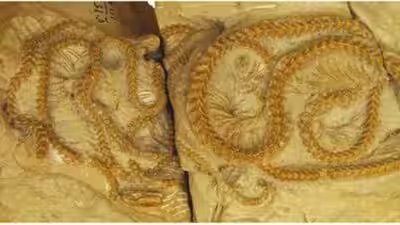
Scientists discovered four snakes curled together in a burrow for 38 million years as the volcanic ash preserved their remarkable fossils |

Overview of Hibernophis breithaupti (UW11120 on two blocks), showing holotype (UW-11120-A) and paratype (UW-11120-B) specimens as exposed on the surface. Image Credit: Zoological Journal of the Linnean Society A snake fossil discovery in Wyoming has given palaeontologists an unusually close look at the lives of these ancient reptiles. Four complete skeletons belonging to a newly…

Read More

For the first time in history, astronauts use portable X-ray technology in space that could pave the way for future Moon and Mars missions |

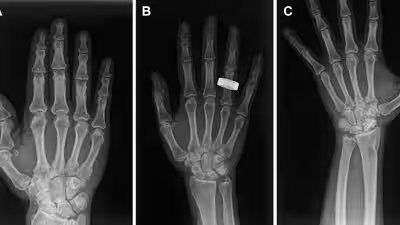
Representative preflight, in-flight, and post-flight hand radiographs. Radiographs of the hand were acquired (A) preflight by a crew member, (B) in-flight on day 1 after launch (L+1) by a crew member, and (C) post-flight by a non-crew operator using the same imaging protocol. Image Credit: Radiological Society of North America(RSNA)​ The first X-rays taken in…

Read More

Tasmania spent 28 years removing invasive carp from two lakes; after 49,301 fish were taken out, the state declared carp functionally eradicated and trout began bouncing back

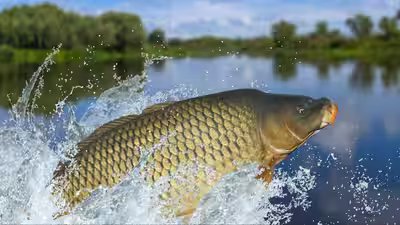
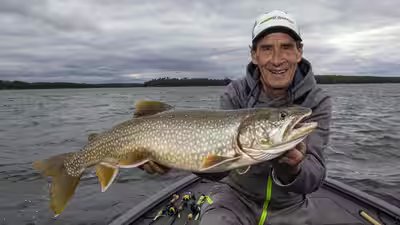
Invasive Species: Why Are Asian Carp a Problem? An intensive 28-year eradication campaign has eliminated common carp from two major Tasmanian lakes, achieving what fisheries experts around the world once considered almost impossible in a large, open freshwater system. The Tasmanian Inland Fisheries Service (IFS) has officially declared European carp (Cyprinus carpio) functionally eradicated from…

Read More

In 1978, just 10 to 15 cane toads were moved to Ishigaki Island. Decades later, their population increased to 20,000 with surprising evolutionary change |

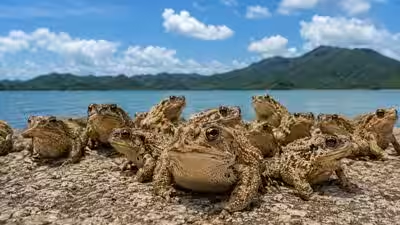
On Ishigaki Island, cane toads have been living in conditions quite different from those faced by the populations from which they came. The island is warm, wet and separated from mainland habitats, and the animals introduced there in the late 1970s have now had several decades to establish themselves. When scientists compared these Japanese toads…

Read More

In 2002, New Mexico began one of America’s largest native-fish restoration projects; more than two decades later Rio Grande cutthroat trout had returned to 120 miles of streams

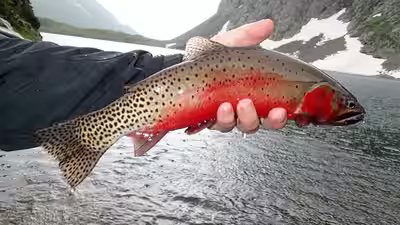
A major conservation effort launched in 2002 has restored New Mexico’s official state fish to more than 120 miles of connected mountain streams, marking one of the largest native fish restoration projects in the United States. For more than two decades, state and federal conservation agencies have worked to remove non-native predators and restore high-altitude…

Read More

In 2006, Idaho launched a bounty-and-netting war on invasive lake trout; a decade later adult numbers were down 64% and Lake Pend Oreille’s kokanee had rebounded

An aggressive campaign using commercial nets and angler bounties helped turn around a decade-long fight against non-native predators in northern Idaho’s largest lake. By 2016, ten years after the Idaho Department of Fish and Game (IDFG) began its suppression programme on Lake Pend Oreille, the number of adult lake trout had fallen by 64 per…

Read More

Two Kochi postgraduates turned a mud-crab farming problem into a national-winning startup, earning a Rs 10 lakh grant for a bucket system that can help farmers raise premium crabs inland

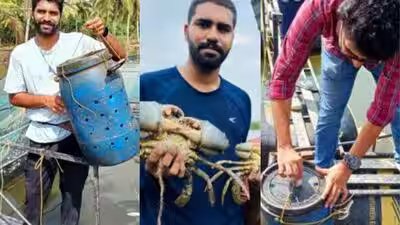
Arundas N H and Aswathy T (PC: ccari) Two postgraduates from Kochi have made headlines after turning a stubborn challenge in mud-crab farming into a technology-driven startup. The two brilliant minds have now won national recognition along with a ₹10 lakh innovation grant. Meet Arundas N H and Aswathy T, the two graduates of the…

Read More

Bengaluru cancer centre begins using Karnataka’s first Elekta Unity MR-Linac, combining real-time MRI with radiation delivery so doctors can adapt treatment while a tumour is being targeted

In a significant development, a Bengaluru cancer centre has begun using Karnataka’s first Elekta Unity MR-Linac bringing MR-guided adaptive radiation therapy to the state. The HealthCare Global Enterprises (HCG) in the city has started treating patients with the new technology. As per HCG’s August 18, 2026 announcement and Elekta’s technical information, the system combines a…

Read More