
Headlines

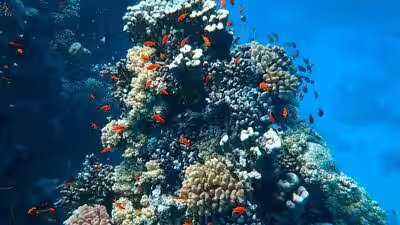
In 2025, Miami Beach sank 22 concrete cars 20 feet underwater; the surreal traffic jam was built to support 2,200 corals and marine life

In 2025, Miami Beach launched one of the most ambitious underwater art and conservation projects in the world. According to a report by the Miami Herald, the city sank 22 concrete cars 20 feet beneath the ocean surface, creating a surreal traffic jam designed to support 2,200 corals and marine life. The installation, part of…
Read More

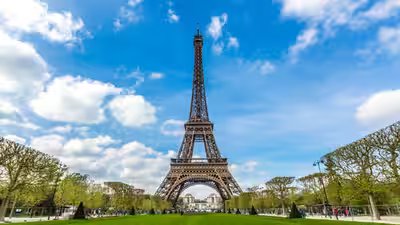
The Eiffel Tower is not always 330 metres tall: Why Paris’ iconic landmark gets slightly taller during hot summer days

Why Paris’ Eiffel Tower Gets Taller When Temperatures Soar: The Simple Scientific Reason Behind Its Unexpected Seasonal Change (Canva) The Eiffel Tower looks as solid and unchanging as a monument can possibly be. Yet, on a hot summer day, Paris’ most famous landmark can actually become slightly taller.There is no new section being added, of…

Read More

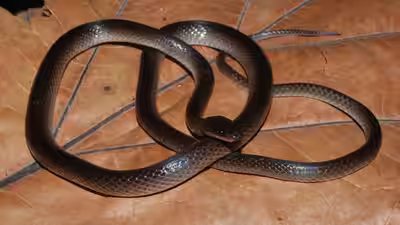
A new snake species discovered in the jungle has been named after Guns N’ Roses guitarist Slash; here’s why scientists chose the rock star’s name

A new snake species discovered in the jungle has been named after Guns N’ Roses guitarist Slash (Image credit: Chris Austin via Field Museum) A newly described snake from the forests of New Guinea has been given a name familiar to rock fans around the world. Scientists have named the non-venomous species Lielaphis slashi, or…

Read More

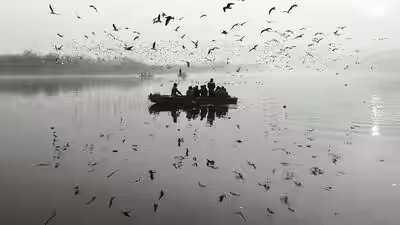
After helping turn a barren Dhanbad coal-belt hillock into forest, CISF is planting 1,000 trees and one lakh vetiver slips across six acres beside Delhi’s Yamuna to revive the degraded land

Delhi’s Yamuna is all set for a much-awaited green makeover. The Central Industrial Security Force (CISF) has started replicating a forest-reclamation experiment that was successfully carried out in the coal-mining belt of Dhanbad, Jharkhand. As per a recent report on the initiative, about 100 CISF personnel planted 1,000 fruit-bearing and medicinal trees and one lakh…

Read More

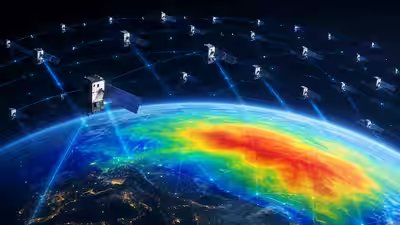
Researchers turned data from roughly 1,200 Starlink satellites into a giant scanner for Earth’s upper atmosphere, mapping a hard-to-observe region around 500 kilometres above the planet

Representative Image (AI-generated) A network of Starlink satellites designed primarily for internet connectivity is giving scientists a new way to study one of the hardest-to-observe regions of Earth’s atmosphere. According to a study by researchers at Kyoto University, publicly available orbital data from roughly 1,200 Starlink satellites were used to estimate the density of the…

Read More

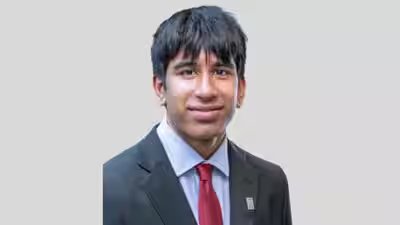
Meet Mythreya Dharani, the 18-year-old New Jersey student who built an AI model to predict how individual tumors will respond to the chemotherapy drug cisplatin

Mythreya DharaniPhoto credit: Society for Science Mythreya Dharani’s achievements in the high school science research arena are few and far between. The Society for Science, which organizes the prestigious Regeneron Science Talent Search, announced that 18-year-old Mythreya from New Jersey developed an AI model to predict how individual tumors would respond to the chemotherapy drug…

Read More

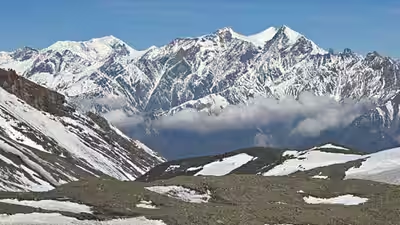
24 billion tonnes of groundwater are being lost every year across Asia’s high mountains; why the water crisis is far bigger than melting glaciers

Groundwater reserves beneath High Mountain Asia (HMA) often called the ‘Asian water tower’ are depleting at an alarming rate, according to a new satellite-based study. The region provides water that supports farming, cities, and ecosystems in more than a dozen downstream countries and is a critical resource for hundreds of millions of people. But as…

Read More

Astronomers uncover evidence of a galaxy merger 12 billion years ago that helped shape the young Milky Way |

PC: NASA, ESA, Joseph Olmsted (STScI)/Handout via REUTERS Nearly 12 billion years ago, the Milky Way was still in its infancy, assembling itself from smaller collections of stars, gas and dark matter. During that turbulent period, another galaxy came within its gravitational reach and was eventually absorbed, leaving traces that have survived to the present…

Read More

Sophie Adenot becomes first French woman to walk in space as unfinished ISS antenna job requires second spacewalk |

Sophie Adenot’s first spacewalk was supposed to be about replacing an antenna. Instead, the 18 August outing left the French astronaut with two milestones to carry back inside the International Space Station: becoming the first French woman to walk in space, and an unfinished repair that will require another trip outside. Adenot and Nasa astronaut…

Read More

Scientists are using thousands of hours of rainforest sound recordings to teach AI to recognise birds that were previously difficult to identify |

PC: Dhruv Varun Cohen ’26/Cornell University Thousands of hours of rainforest recordings are helping scientists teach artificial intelligence to recognise Amazonian birds that can be difficult to identify by sound alone. In Colombia, Cornell researchers have been collecting acoustic data from cattle ranches, rubber agroforestry plots and forest to build a clearer picture of which…

Read More