









Headlines

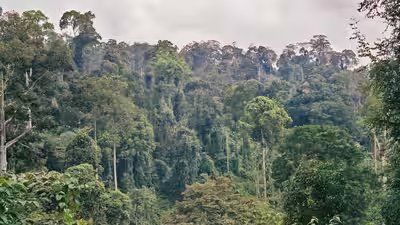
Scientists cut climbing vines from a damaged Borneo forest. Its canopy then grew three times faster, and the method may cost 10 times less than tree planting

Dipterocarp forest at the Danum Valley Field Centre. Borneo’s tropical forests, dominated by trees from the Dipterocarp family, have some of the highest canopies in the world, with some trees reaching 100 meters Simply cutting back aggressive climbing vines in logged tropical forests allows the tree canopy to recover three times faster than planting new…

Read More

Scientists warmed the same forest soil by 5°C for 37 years; in the fourth decade, microbes began releasing carbon once thought safely locked away

It’s not just humans that are at risk of extinction due to global warming, it’s the Earth, too. In research conducted over a period of 40 years, scientists have uncovered evidence that challenges long-held assumptions about forest soils.While on the first glance, the Harvard Forest seems like an ordinary woodland filled with oak trees, there…

Read More

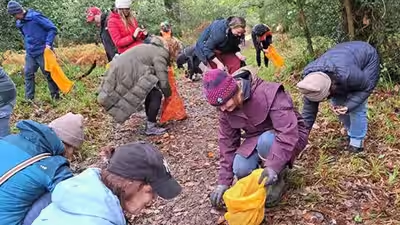
Around 100 volunteers collected 11 million seeds by hand across Scotland; nearly 8 million native trees are now being grown to rebuild its disappearing Atlantic rainforest |

Volunteers hand-collect native tree seeds from Scotland’s remote woodlands to help restore the country’s endangered Atlantic rainforest and native forests. In one of Scotland’s largest citizen-led woodland restoration efforts, around 100 volunteers have spent the past three years hand-collecting more than 11 million rare native tree seeds from remote forests, islands and rugged coastlines. The…

Read More

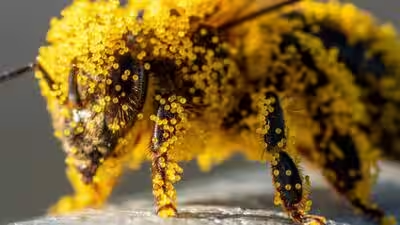
How tiny pollen grains helped solve a brutal murder: The fascinating science behind nature’s invisible crime scene evidence

Blood, fingerprints, and weapons aren’t the only evidence investigators look for at a crime scene; pollen is another. Pollen grains are one piece of evidence that has helped solve some of the highest-profile murder cases in recent years, one grain at a time. The tiny grains that might be invisible to the naked eye actually…

Read More

A 1971 prediction by Stephen Hawking just came true with a cosmic collision 1.3 billion light-years away: Now scientists are trying to understand how

A prediction made by Stephen Hawking some 50 years ago has just come true and now, scientists are trying to understand how it reinforces fundamental principles of modern physics. A collision between two black holes about 1.3 billion light-years from Earth has provided the most precise observational evidence ever obtained for a prediction presented by…

Read More

Swiss cows wear giant bells around their necks. The reason began with a simple problem in the mountains |

There is a particular sound that belongs to the Alps in summer. It drifts across mountain meadows, echoes from rocky slopes and sometimes arrives before the animals themselves come into view. The ringing of cowbells has become so closely associated with Switzerland, Austria and parts of southern Germany that many visitors assume the bells exist…

Read More

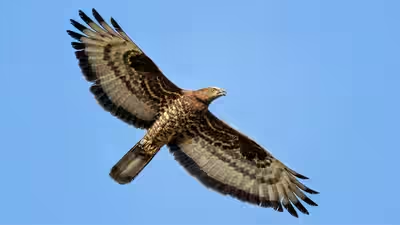
Scientists fitted a European honey buzzard with a GPS tracker. The bird flew for 42 days, covering more than 10,000 km from South Africa to Finland and helping researchers uncover the secrets of one of nature’s greatest migrations |

A tiny GPS tracker attached to a European honey buzzard revealed an extraordinary feat of endurance that few humans could match. Over 42 days, the bird travelled more than 10,000 km from its wintering grounds in South Africa to its breeding habitat in Finland, crossing deserts, mountain ranges and numerous countries along the way. The…

Read More

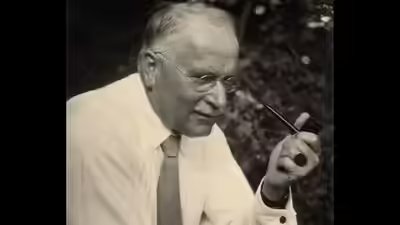
Quote of the day by famous psychiatrist Carl Jung: “Everything that irritates us about others can lead us to…” – a timeless insight explains why the people who frustrate us often become our greatest teachers |

Carl Jung (Image: Wikipedia) Some habits in other people barely register. Others set off a reaction that feels completely out of proportion to what actually happened. Carl Jung, the psychiatrist who helped shape modern psychology, thought that gap was worth paying attention to. “Everything that irritates us about others can lead us to an understanding…

Read More