









Headlines

Scientists may have solved the 252 million-year-old mystery behind Earth’s greatest mass extinction |

The story of life in the oceans changed long before dinosaurs appeared and vanished. Around 252 million years ago, the planet experienced the most destructive biological crisis known in the fossil record, wiping out almost all marine species and reshaping life beneath the waves. Although scientists have spent decades examining what happened during the Permian-Triassic…

Read More

Scientists are racing to solve the mystery of Poland’s 90-year-old Crooked Forest before its bizarre C-shaped pine trees die out forever |

There is a small patch of woodland in western Poland where the landscape quietly breaks expectations. At first glance, it looks like an ordinary pine forest, but after walking a few steps further, the pattern becomes impossible to ignore. As reported by Russian and East European studies, hundreds of trunks curve sharply near the ground…

Read More

Indian-origin astronaut Anil Menon lifts-off to ISS: Inside Russia’s eight-month mission

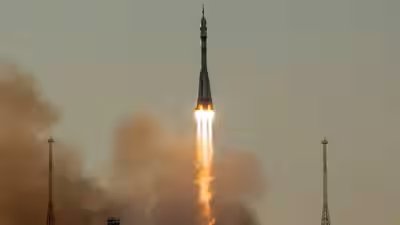
The Soyuz rocket launches to the International Space Station with Expedition 75 crew members Indian-origin Nasa astronaut Anil Menon, along with his two Russian cosmonauts on Tuesday lifted off aboard the Roscosmos Soyuz MS-29 spacecraft for his first spaceflight, beginning an approximately eight-month mission to the International Space Station (ISS).The spacecraft launched from the Baikonur…

Read More

Quote of the day by popular psychiatrist Thomas Szasz: “If you have strongly held opinions, you are opinionated; if you don’t, you lack…” – a witty observation that exposes the impossible standards society often places on independent thinkers |

Thomas Szasz (Image: Wikipedia) Say what you actually think and someone will call you opinionated. Keep your views to yourself and someone else will say you lack conviction. Thomas Szasz, the Hungarian-American psychiatrist known for challenging almost every accepted idea in his own field, summed up that impossible bind in one line. “If you have…

Read More

Japan’s 2011 megaquake sent a seismic wave nearly 2,900 km to Earth’s core, which returned 13 minutes later and shifted the entire country eastward |

A seismic wave generated by Japan’s devastating 2011 magnitude 9.0 Tohoku-Oki earthquake travelled nearly 2,900 kilometres to the boundary of Earth’s core, reflected back about 13 minutes later and shifted the entire country eastward by roughly six millimetres, according to a study published in the journal Science. The movement was far too small for anyone…

Read More

Scientists say crushing deep-ocean pressure squeezes hidden nutrients out of sinking marine snow, feeding microbes and changing what we know about Earth’s carbon cycle

Scientists say crushing deep-ocean pressure squeezes hidden nutrients out of sinking marine snow, feeding microbes and changing what we know about Earth’s carbon cycle (Representational AI image) Life in the deepest parts of the ocean may have access to more food than scientists once believed. A new study has found that the huge pressure found…

Read More

This supersonic jet needed a radiation meter to monitor cosmic storms because it flew twice as high as commercial aircraft at a speed of 2,470 km/h, near the edge of space

Concorde flew so high that it was forced to carry a radiation meter to track dangerous cosmic storms British-French supersonic jet Concorde flew so close to the edge of space that it had to carry a special radiation meter to monitor dangerous cosmic storms. If the cockpit instrument sounded an alarm, the only way pilots…

Read More

Meet the magnetic liquid metal robot that can split, merge and squeeze through tiny gaps like a living cell |

Scientists have developed a remarkable liquid robot that blurs the line between machines and living organisms. Created by researchers from Seoul National University and Gachon University, the robot is made from liquid metal coated with a dense armour of microscopic particles and embedded with magnetic particles that allow it to be controlled remotely. Unlike conventional…

Read More

Alaska: Scientists find that humans and dogs have such a friendly relationship because early ancestors fed salmon to canines 12,000 years ago

Humans Fed Salmon to Canines 12,000 Years Ago, Study Suggests, Hinting at the Origin of Our Relationship With Dogs Early humans in Alaska were sharing their salmon catches with ancient canines 12,000 years ago. This shows that close relationships between humans and dog ancestors developed 2,000 years earlier than anyone previously thought in the Americas.The…

Read More