


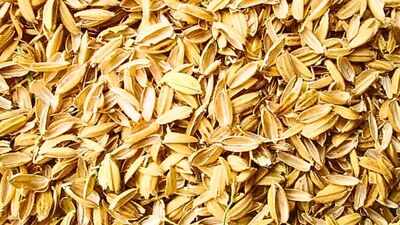
Rice husk ash, a waste material from rice mills, may help make asphalt stiffer and more resistant to heat, according to a new study. Researchers tested asphalt mixed with different amounts of the ash to see how it behaved at different temperatures. The results showed that adding rice husk ash increased the asphalt’s stiffness, elasticity, and resistance to permanent deformation at high temperatures.According to the research published in Cleaner Engineering and Technology titled ‘Holistic characterisation of rice husk ash-modified asphalt: Integrating chemical, thermal, and rheological perspectives’, rice husk ash changed the physical, thermal, and viscoelastic properties of asphalt.
How did rice husk ash affect asphalt at high temperatures
The study tested rice husk ash-modified asphalt using 5%, 10%, 15%, and 20% ash by weight. The researchers found that adding the ash reduced penetration while increasing the softening point and viscosity of the asphalt. These changes showed that the material became stiffer as the ash content increased. The effect was also reflected in the high-temperature results. The critical upper temperatures for the base asphalt, 5%, 10%, 15%, and 20% ash mixtures were 64, 70, 70, 76, and 76°C, respectively. The study reported that 5% and 15% ash raised the upper temperature by 6 and 12°C. The researchers said these results indicated stronger resistance to permanent deformation at higher pavement temperatures.
PC: Wikipedia
How did different amounts of rice husk ash affect the mixture
The amount of rice husk ash affected how evenly the material mixed with asphalt. At 5% ash, the particles were sparsely distributed and showed good wetting and adhesion with the asphalt. At 10%, the asphalt coated the particles effectively, although slight clustering appeared. At 20%, the particles formed larger clusters, which could lead to an uneven blend and separation of the materials. The study linked the higher values at larger amounts to particle settling during storage. It also found that higher ash content increased resistance to flow and reduced workability during processing.
Effects of rice husk ash on asphalt at lower temperatures
The benefits of rice husk ash were not the same across all temperatures. The study found that 5% ash increased the critical intermediate temperature from 16°C to 22°C. At 20% ash, it rose to 28°C, indicating a possible loss of flexibility at lower pavement temperatures. Rheological analysis of fatigue behaviour also indicated that fatigue life decreased as ash content increasedThe effect was slight at 5% ash but became more important at higher amounts. Low-temperature rheological analysis showed that 5% ash did not significantly change cracking resistance. Higher amounts, however, reduced the asphalt’s ability to withstand low-temperature stresses and increased the risk of cracking. The study also linked higher ash content with greater brittleness and weaker low-temperature performance in the asphalt.
What are the benefits and risks of adding rice husk ash to asphalt
The researchers found that rice husk ash changed the physicochemical, thermal, and viscoelastic properties of asphalt. Its porous surface helped strengthen the bond between the ash and asphalt, while its silica content contributed to changes in thermal behaviour. Statistical analysis showed that ash inclusion significantly affected thermal behaviour, workability, rutting performance, and fatigue cracking. The results showed a trade-off as the ash amount increased.Higher amounts improved stiffness and high-temperature rutting performance but also increased workability problems, brittleness, and the risk of fatigue and low-temperature cracking. Its use at intermediate and low temperatures needs greater control because larger amounts can reduce flexibility and cracking resistance. The study’s findings also point to a need for controlled use when lower temperatures are expected.


