


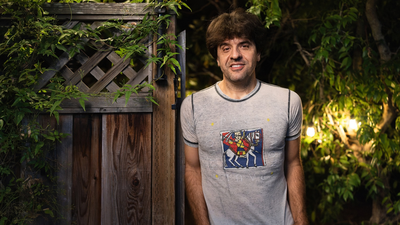
Karl Deisseroth was working late on a research paper and had just gone to lie down when a call from Stockholm arrived with news that would change his night. The Stanford psychiatrist and scientist had been awarded the 2026 Nobel Prize in Physiology or Medicine, sharing the honour with Peter Hegemann and Georg Nagel for discoveries concerning light-gated ion channels and optogenetics. “I was not yet asleep, being a night owl, and now I don’t think I’ll be able to sleep for quite a while,” Deisseroth told the Nobel Prize website in his first reaction. He said his children were still asleep and that he was thinking about the trainees, staff and collaborators who had contributed to the work.
A late-night Nobel call to Karl Deisseroth
Deisseroth told Nobel Prize interviewer Adam Smith that he had been working on a paper before going to bed when the call came. Although the announcement arrived in the middle of the night, he was awake because he tends to work late. After receiving the news, he said he expected sleep to be difficult for some time. He also spoke about the people behind the research, saying he wanted to take a quiet moment to think about the trainees, staff and collaborators around the world who had helped make the work possible. The Nobel Prize was awarded jointly to Deisseroth, Hegemann and Nagel on October 5, 2026.
The discovery that made neurons respond to light
The trio was recognised for discoveries that established optogenetics, a technique that allows researchers to control selected cells using light. The story began with research into the single-celled green alga Chlamydomonas, which can sense light and move towards it. Hegemann investigated how the organism converted light into an electrical response, while Nagel helped demonstrate the function of the light-sensitive protein later known as channelrhodopsin. When exposed to light, the protein opens an ion channel, allowing charged particles to flow through the cell membrane and generate an electrical signal. Their work provided the crucial biological component for a technology that would later transform neuroscience.
How Deisseroth turned it into a brain research tool
Deisseroth and his collaborators adapted light-sensitive proteins for use in nerve cells, allowing scientists to activate or inhibit specific neurons with precisely timed flashes of light. Landmark experiments in 2005 demonstrated that the approach could control the firing of neurons, while subsequent work showed that it could be used in living animals. This gave neuroscientists a way to move beyond simply observing brain activity and experimentally test what particular groups of cells actually do. The Nobel Committee said optogenetics has made it possible to study how nerve cells shape memories, feelings and behaviours in living brains, providing a powerful way to investigate the relationship between neural circuits and behaviour.
From brain circuits to psychiatric disorders
For Deisseroth, the discovery also has a personal connection to his work as a psychiatrist. In his Nobel interview, he explained that treating patients gives him a direct perspective on the experiences that matter to people living with mental illness. He said patients describe altered mental states that can be extremely disruptive and difficult to study, and that listening to them has influenced how he designs experiments and explains their importance to students. Optogenetics is now being used largely as a research tool to investigate neural circuits associated with conditions and behaviours including addiction, dementia, epilepsy and other neurological and psychiatric disorders.
A scientist hopes the prize can reduce mental health stigma
Deisseroth also used his first-reaction interview to discuss the stigma surrounding psychiatric disorders. He said he hopes the visibility provided by the Nobel Prize can help people understand mental illness through the broader context of biology, evolution, genetics and individual experience. Rather than viewing psychiatric conditions as completely separate from ordinary human experience, he argued that many altered mental states exist along spectrums and can have roots in evolutionary history. For him, connecting scientific understanding with the experiences described by patients could foster greater empathy for people who struggle to explain what they are going through.
What the Nobel-winning work could mean for medicine
Optogenetics remains primarily a research technology, but its precision has also opened potential medical applications. Researchers are exploring ways to use light-sensitive proteins in attempts to restore vision when conventional photoreceptor cells have been damaged, while related approaches are being investigated for improving the precision of cochlear implants. The technology’s broader value is that it allows scientists to establish causal links between particular cells and complex behaviours, rather than merely observing that a brain region is active. Deisseroth’s Nobel recognition therefore reflects both a fundamental discovery and a research method that has changed how scientists investigate the living brain.


