









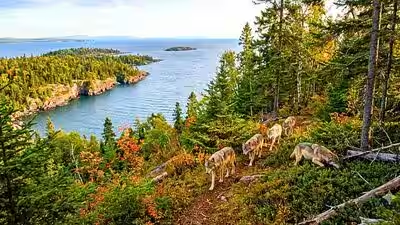
A new study reveals that wolves brought back to Isle Royale National Park are building a self-sustaining population. Researchers observed the wolves from September 2018 to September 2023 after the National Park Service released 19 animals captured in Minnesota, Michigan and Ontario. The population grew steadily during this period, reaching a minimum of 27 wolves by April 2023, compared with 10 during the first monitored winter. The wolves reproduced every year and formed packs that occupied territories similar to those used by earlier wolf packs on the island. According to the study published in Conservation Science and Practice titled ‘Five-year assessment of wolf translocation to Isle Royale National Park, 2018-2023’, a family group from Michipicoten Island played a major role in rebuilding the population. The population also has a strong chance of surviving in the long term, with modelling showing more than an 80% chance of surviving for 20 years.
How did the Isle Royale wolf population grow after the translocation
Wolf restoration began after the island population had fallen to a related non-breeding pair by 2016. Between September 2018 and September 2019, the National Park Service released 19 wolves from four nearby populations. The animals came from Minnesota, Michigan, and Ontario. Researchers selected adult wolves in good condition and sought social bonds by moving some animals from the same packs. The aim was to create a population that could survive for at least 20 years while restoring predation to the island ecosystem. The study compared survival, reproduction, pack formation, and population size with historical patterns. Researchers used GPS collars and field tools, remote cameras, howl surveys, and population viability analysis to monitor the population over time. These methods helped researchers assess whether the restored population was developing as intended.
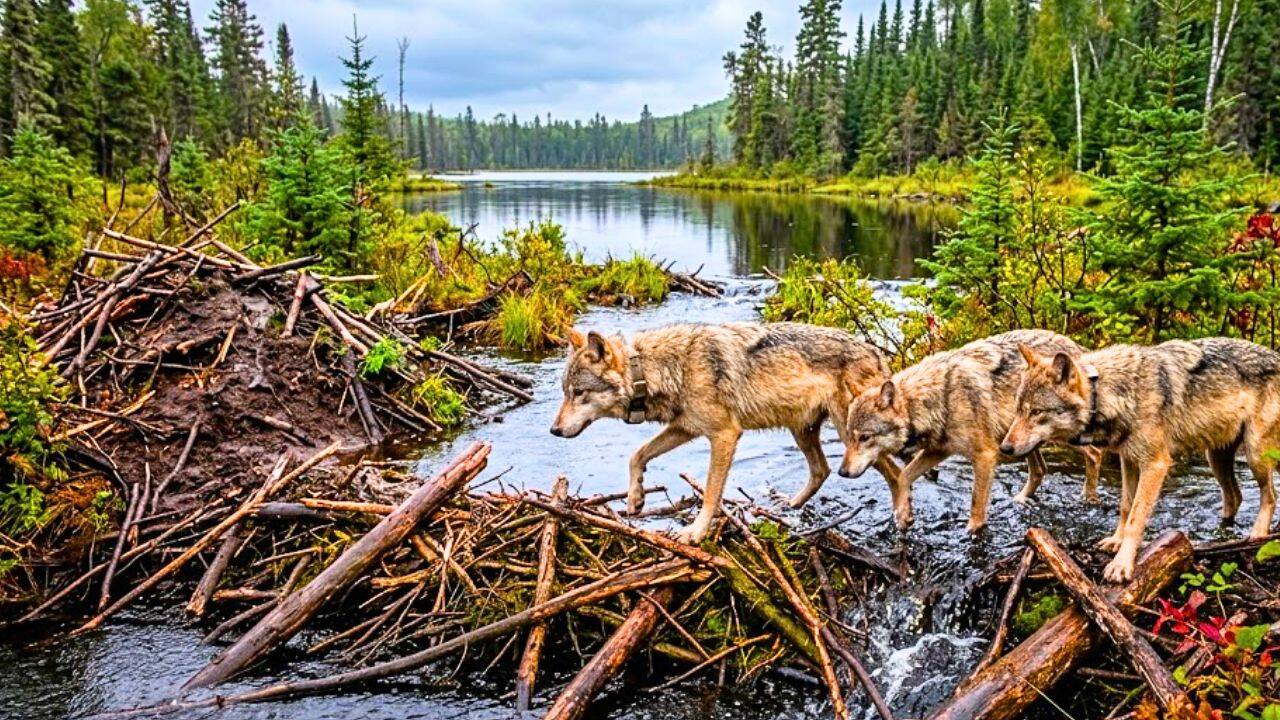
PC: AI Generated
How did the relocated wolves reproduce and form packs on Isle Royale
The restored population grew during the study. The minimum number of wolves increased from 10 in 2019-2020 to 23 in each of the next two winter seasons and then 27 in 2022-2023. Researchers recorded at least 10 litters and 29 pups during the five years. The proportion of young wolves was similar to earlier estimates from Isle Royale. Three packs were identified, with territories remaining stable between 2019 and 2023. The wolves from Michipicoten Island had the highest survival rate among the relocated animals.
What caused deaths among the translocated wolves on Isle Royale
Survival among the translocated wolves was generally high, but several deaths were recorded during the study. Researchers documented 11 deaths among 28 collared wolves. Five were confirmed or suspected to have been caused by aggression between wolves, making it the most prominent cause identified in the study. Four deaths could not be linked to a specific cause. Two other wolves died after capture or translocation from apparent injuries or stress and were not included in the survival analysis.The wolves had an estimated annual survival rate of 0.74. Their survival may have been helped by the island’s abundant prey and the lack of human-caused deaths. However, a growing population could bring greater competition between wolves.
What challenges could Isle Royale’s wolves face in the future
The study found that the restoration has met its five-year objective, but genetic health remains a concern. Simulations indicated more than an 80% probability of persistence for 20 years even under high levels of inbreeding. However, the researchers warn that the social and numerical dominance of the Michipicoten family group could reduce genetic diversity. The previous Isle Royale population had suffered from inbreeding, while warmer winters may also reduce the formation of ice bridges, allowing genetic exchange with the mainland.