


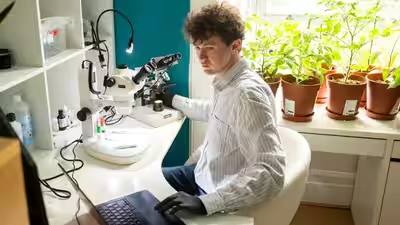
Alfred Drummond-Herdman, a 27-year-old trainee lawyer in Edinburgh, has turned his bedroom into an unusual fungal observation space, filling terrariums and plastic containers with cowpats, grouse droppings and rabbit pellets to document the fungi that grow on them. His fascination with dung-dwelling fungi began during the pandemic after he encountered cowpats covered with mushrooms in Scotland’s Ochil Hills. He now uses macro photography, microscopy and time-lapse videos to document fungi as they develop, with some of his footage attracting millions of views online. His work has also moved beyond social media into formal taxonomy. Drummond-Herdman has contributed to scientific descriptions of new fungal species, helping reveal a largely overlooked world of biodiversity growing on animal dung.
27-year-old trainee lawyer develops an unusual fascination with fungi
Drummond-Herdman’s interest in fungi began during the pandemic when he encountered cowpats covered with mushrooms while walking in the Ochil Hills near Stirling. He began searching online to identify the unusual fungi he had seen, but what started as simple curiosity developed into a deeper interest in coprophilous fungi, which are fungi that grow on animal dung. He is a self-taught amateur taxonomist who now works with other enthusiasts and experts to study fungal specimens in Britain. His professional background is in law rather than mycology, making his journey into fungal research particularly unusual. The experience also led him to explore fungi that most people would probably overlook because of where they grow.Drummond-Herdman keeps animal dung samples inside terrariums and plastic containers around his Edinburgh bedroom so he can observe the fungi that emerge from them. His collection has included cowpats, grouse droppings and rabbit pellets. He told the Guardian that he has a very understanding housemate who tolerates the unusual collection. The samples allow him to observe fungal growth closely and photograph it as the organisms develop. He also has a microscope station where he can examine specimens in greater detail. Despite the unusual contents of the containers, Drummond-Herdman said the dung does not smell as strongly as people might expect because the material comes from herbivores and consists largely of undigested plant matter.
His time-lapse videos show fungi coming to life
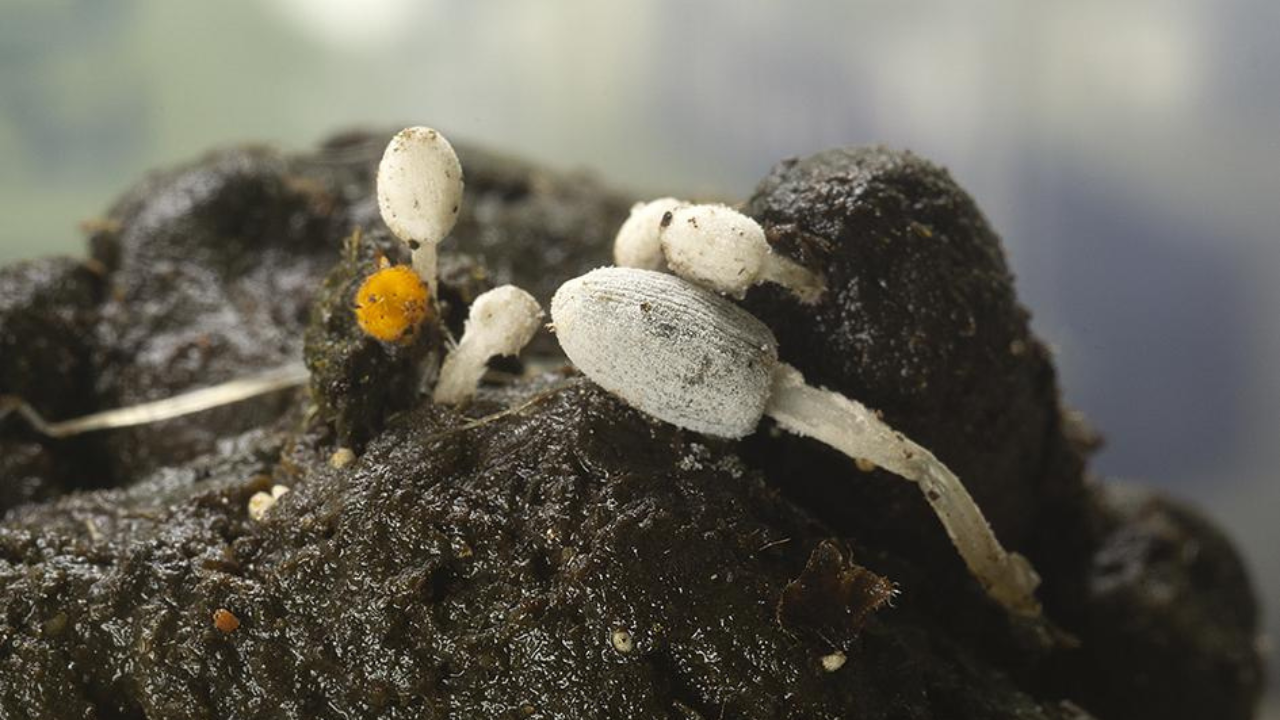
One of the most distinctive aspects of Drummond-Herdman’s work is his use of time-lapse photography. He photographs fungi at short intervals as they grow and combines the images to create videos showing their development. This allows viewers to see changes that would be difficult to notice from a single photograph. His Instagram account, @scottish.fungi, has attracted more than 60,000 followers, while some of his posts have received millions of views. His subjects include inkcaps, fieldcaps and Ascobolus, along with fungi growing on deer droppings and unusual slime moulds. He has said he is fascinated by the contrast between something as ordinary as a cowpat and the striking forms of fungi that emerge from it.
His work has contributed to the identification of new fungal species
Drummond-Herdman’s interest has extended beyond photography and social media into formal fungal taxonomy. In 2025, he was a co-author of a peer-reviewed paper in Phytotaxa describing Bolbitius corrugatus as a new coprophilous species from Scotland. Researchers used morphological characteristics alongside phylogenetic analysis based on ITS and LSU DNA sequences to support the description. The publication also included a time-lapse video documenting the fungus as it developed. His work therefore provides an example of how observations made by an enthusiastic amateur can contribute to formal scientific research when combined with microscopic examination, genetic analysis and collaboration with specialists.
Why fungi growing on animal dung matter
Coprophilous fungi may appear to occupy a particularly obscure corner of the natural world, but they form part of the wider biodiversity of ecosystems. Animal dung provides a specialised habitat for fungi, with different species adapted to exploit the material. Studying these organisms can help scientists understand fungal diversity and the ecological relationships surrounding them. The Guardian cited Kew estimates suggesting that at least 2 million fungal species remain to be discovered around the world, underlining how much fungal diversity remains undocumented. Drummond-Herdman’s work brings attention to a group of organisms that can easily be missed because they are small, short-lived or found in places people rarely examine closely.
The trainee lawyer wants people to notice Britain’s hidden biodiversity
Drummond-Herdman hopes his videos will encourage people to look more closely at fungi and the wider natural world. He has argued that taxonomy is fundamental to biodiversity research because scientists need to know what species exist before they can properly understand their habitats, distributions and conservation needs. His work combines field observations, macro photography, microscopy and genetic analysis, while his online videos make the results accessible to a much wider audience. What began with a walk past mushroom-covered cowpats during the pandemic has therefore developed into a serious interest in fungal taxonomy, scientific collaboration and public engagement, giving millions of viewers a glimpse of a hidden ecosystem growing in animal dung.


