


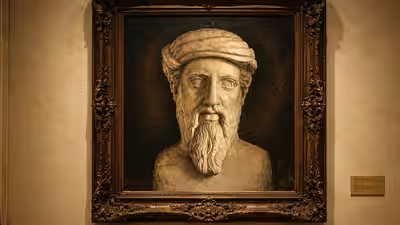
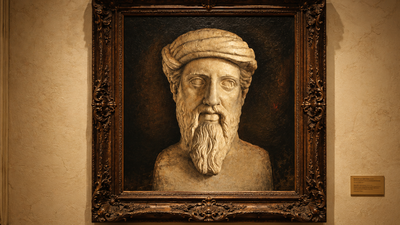
Pythagoras is best known today for the mathematical theorem that bears his name, but the ancient Greek thinker was also associated with a broader philosophical tradition that explored morality, discipline, friendship and the pursuit of a virtuous life. One saying attributed to him offers a timeless reflection on the people we choose to keep close: “Of all the rest of mankind, make him your friend who distinguishes himself by his virtue.” The idea places character above status, wealth or popularity when it comes to friendship. It suggests that the people around us should be chosen not simply because they are entertaining or useful, but because their conduct reflects qualities worth learning from. The message remains relevant in an age when friendships can often be shaped by social status, professional connections or online popularity. For Pythagorean philosophy, friendship was closely connected with moral development, and the right companion could help a person become better through example, advice and shared values.
Quote of the day by Pythagoras
“Of all the rest of mankind, make him your friend who distinguishes himself by his virtue.”The saying appears in versions of the Golden Verses of Pythagoras, a collection of teachings associated with the Pythagorean tradition. In one English translation, the corresponding passage advises readers to choose as a friend someone who is virtuous, to listen to that person’s gentle counsel and to learn from their life.The central idea is straightforward: friendship should be based on character. Pythagoras, or the tradition associated with his teachings, appears to have regarded friendship as more than companionship. A good friend could serve as an example, offering guidance through their actions and helping another person remain committed to a better way of living.
What did Pythagoras mean by the quote?
The quote encourages people to look beyond superficial qualities when choosing friends. Wealth, influence, appearance and popularity can make someone attractive as a companion, but these qualities do not necessarily reveal a person’s character. Virtue, by contrast, is demonstrated through behaviour and choices.The saying therefore presents friendship as a relationship that can influence personal growth. If someone consistently behaves with honesty, discipline, fairness and kindness, their example can encourage similar qualities in those around them. The message is not necessarily that a person should only associate with people who are perfect. Rather, it suggests that people should value friends whose character gives them something positive to learn from.This idea is especially significant because friendships can shape attitudes and behaviour over time. The people we spend time with can influence how we think, what we value and how we respond to difficult situations. Choosing companions carefully can therefore become part of developing one’s own character.
Who was Pythagoras?
Pythagoras was an ancient Greek philosopher and religious thinker who is traditionally dated to around the sixth century BCE. He is most famously associated with the Pythagorean theorem, although the historical relationship between the theorem and Pythagoras himself is more complicated than the popular version suggests.Pythagoras established a community in southern Italy, particularly at Croton, where his followers pursued a way of life combining philosophical, religious and mathematical ideas. The Pythagorean tradition placed considerable emphasis on discipline, harmony, mathematics and moral development. Modern scholars also caution that much of what is known about Pythagoras comes from later sources, making it difficult to separate his own teachings from ideas developed by later Pythagoreans.
Pythagoras and the importance of virtue
Virtue occupied an important place in the ethical teachings associated with the Pythagorean tradition. The Golden Verses advise people to control their passions, avoid wrongdoing, reflect before speaking or acting and respect themselves. They also encourage people to examine their own behaviour and learn from experience.The advice about friendship fits naturally within this broader philosophy. If a person is expected to cultivate discipline and virtue, then the character of their companions becomes important. A friend who behaves wisely and ethically can provide an example that reinforces those values.The Golden Verses also tell readers to benefit from the life and advice of a virtuous friend. This suggests that friendship was seen as a two-way opportunity for learning and moral improvement rather than merely a source of entertainment or social comfort.
Why choosing friends carefully still matters
The message behind the quote remains surprisingly relevant today. People form friendships for many reasons, including shared interests, proximity, professional connections and social activities. Yet character can be one of the most important qualities in determining whether a friendship becomes a positive influence.A trustworthy friend can provide honest advice when it is needed, encourage better decisions and remain supportive during difficult periods. By contrast, relationships built entirely around status, convenience or personal gain may not offer the same foundation.Pythagoras’ saying therefore asks readers to consider a simple question: What qualities do we actually value in the people closest to us? It encourages a shift away from judging friends by what they possess or how they appear to others and towards appreciating the qualities they demonstrate through their actions.
The wisdom behind the ancient saying
The enduring appeal of the quote lies in its simplicity. Pythagoras, or the later Pythagorean tradition associated with the Golden Verses, presents friendship as something that can influence who we become. A good companion is not merely someone who shares our interests, but someone whose character can inspire us to improve ourselves.That makes the saying relevant far beyond the world of ancient Greece. In an era of social media, networking and constantly expanding social circles, having many connections does not necessarily mean having meaningful friendships. The ancient advice offers a different measure: look closely at character, choose companions who demonstrate virtue and learn from the example they set.


