









Headlines

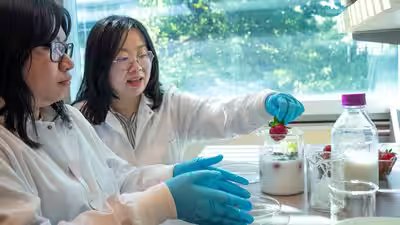
Keeping Strawberries Fresh: Scientists have found a way to keep strawberries fresher than a fridge

Pic credit: Clare Kiernan Everyone loves strawberries. Almost every city has its own version of eating this sweet, bright red fruit. In London, for instance, people often like to eat strawberries dipped in chocolate. In other places, they’re folded into fresh cream, blended into smoothies, or simply eaten as they are on a warm afternoon.But…

Read More

Experts used ‘Judas goats’ to hunt down their own kind, eliminating over 140,000 invasive goats in a $10.5 million mission to save the Galapagos’ native wildlife

In a remarkable ecological initiative, over 140,000 invasive goats have been eradicated from three areas of the Galapagos Islands. This operation, costing $10.5 million, aims to rejuvenate the habitat for native wildlife. Using judas goats fitted with transmitters, conservationists pinpointed the remaining invaders. Following their removal, the area’s native plants are thriving once again, supported…

Read More

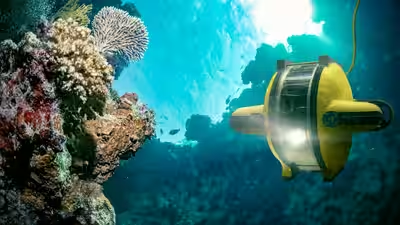
Between 2014 and 2017, underwater robots found surface chlorophyll 1,000 metres deep; scientists have now explained how it arrived

Scientists have solved the mystery of unusually high concentrations of chlorophyll detected more than 1,000 metres beneath the ocean Scientists have solved the mystery of unusually high concentrations of chlorophyll detected more than 1,000 metres beneath the ocean surface by autonomous underwater robots after years of puzzling. The discovery, which took place between 2014 and…

Read More

Meet Seungah Chung, the US eighth-grader who used 200 ants and a maze to discover they navigate by landmarks

Seungah Chung (Image Credit: Society For Science) Most of us have seen ants marching across the ground without giving them much thought. Seungah Chung saw something different. She wondered how such tiny creatures, with brains no larger than a pinhead, manage to find food and then make their way back home without getting lost.That question…

Read More

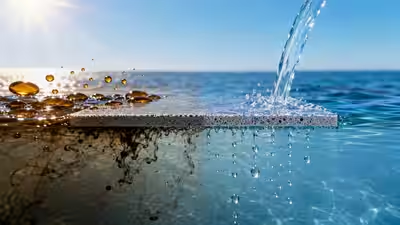
New membrane removes more than 99.99% of oil from seawater while producing fresh water using sunlight |

As freshwater shortages intensify around the world, scientists are searching for technologies that can do more than simply desalinate seawater. One of the biggest challenges is treating oil-contaminated seawater, where conventional desalination systems often fail because oil clogs membranes, blocks water transport and reduces efficiency. Researchers have now developed a multifunctional Janus hydrogel membrane that…

Read More

Quote of the day by Alexander Graham Bell: “When one door closes, another door…” is a reminder to embrace new beginnings |

Disappointment is an unavoidable part of life. A missed opportunity, an unexpected rejection or the end of a cherished chapter can make it feel as though everything has come to a halt. In such moments, it is natural to dwell on what has been lost. Yet Alexander Graham Bell offered a timeless perspective when he…

Read More

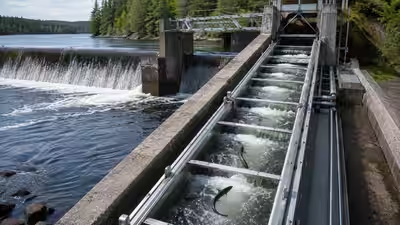
How an eel elevator on Maine’s Penobscot River helped restore millions of fish and brought humpback whales back |

Every spring, millions of migratory fish leave the Atlantic Ocean and swim into freshwater rivers to reproduce, continuing journeys that have existed for thousands of years. On Maine’s Penobscot River, however, hydroelectric dams blocked many of these ancient migrations for more than a century, causing dramatic declines in species such as American shad, river herring,…

Read More

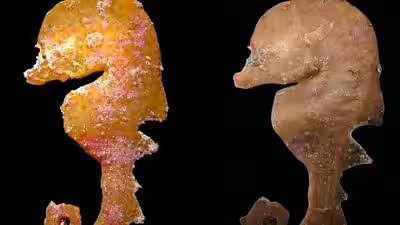
In 2006, a tiny deep-reef fish was pulled from deep water off South Australia and misidentified; nearly 20 years later, scientists recognised a new species

Image Credit: Journal of Lost Species Some discoveries happen the moment a specimen is collected. Others take years. In this case, it took nearly two decades.A tiny deep-reef fish brought up from the waters off South Australia in 2006 spent nearly two decades in a museum collection after being mistaken for a known species. According…

Read More

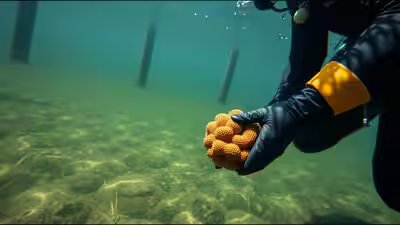
Scientists placed 42 sea sponges in a polluted Spanish port. 455 days later, one species had thrived while four others died |

Representative Image of marine life thriving around resilient chicken kidney sponges in polluted waters (AI-generated image) Researchers in Spain spent 455 days tracking how sponges from five species of Mediterranean sea life coped with being moved from clean, natural habitats toward a heavily polluted recreational marina near Girona. The experiment was designed to test a…

Read More

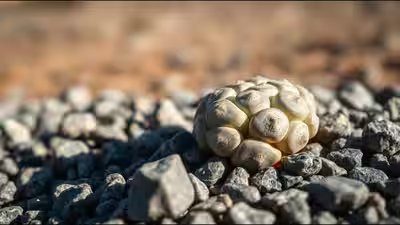
Lithops werneri: The tiny Namibian plant that survives by disguising itself as a pebble. Fewer than 200 now remain in the wild |

Representative Image of Lithops werneri camouflaged among grey stones in Namibia’s Erongo Mountains (AI-generated image) In a small patch of Namibia’s Erongo Mountains, a tiny succulent grows so convincingly disguised as a pebble that most people would walk straight past it without a second glance. This plant, Lithops werneri, survives by mimicking the grey, weathered…

Read More