









Headlines

Scientists identify an insect-eating plant that just proved Charles Darwin’s 150-year-old theory right

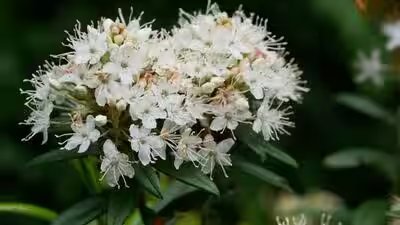
A breakthrough in plant science has validated Charles Darwin’s historic conjecture surrounding carnivorous Saxifraga species. Researchers discovered that these plants ensnare small gnats with sticky hairs, emitting fragrances that lure their prey. Chemical tests confirmed that insects provide essential nutrients upon capture, as showcased by isotope labeling. This pivotal finding sheds light on the complex…

Read More

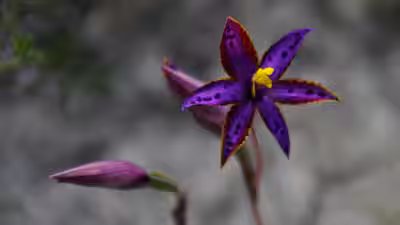
In 2021, Australian scientists cloned one seed of the Queen of Sheba orchid. Five years later, it produced 1,000 plants and its first flower

How cloning one seed of the Queen of Sheba orchid changed its fate Science and innovation can do wonders that are even beyond the cource of nature. The future of an entire species sometimes depends on something so small it’s almost invisible. Wondering what and how? Well, conservation scientists in a Kings Park (Western Australia)…

Read More

In 1950s, the US built a neighbourhood upon 22,000 tons of buried toxic waste, then children began returning home with burns exposing the worst environmental scandal of the country

Originally designed to be a groundbreaking canal project, this site succumbed to a fate of pollution as industrial and municipal waste accumulated over decades. The catastrophic rainfall in 1976 triggered the release of these harmful chemicals into nearby homes, displacing numerous families. This incident catalyzed the formation of the Superfund program, dedicated to remedying toxic…

Read More

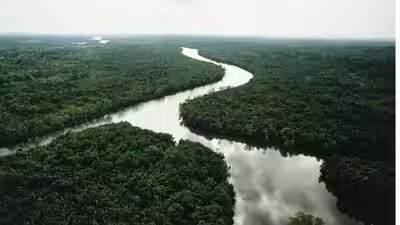
In 2003, China planted small islands of native trees along a degraded river; 20 years later they held only 19–30% of an intact forest’s diversity and biomass

Tropical forests have been heavily degraded because of human activities. (Representational photo) Planting trees across vast areas may not be the only way to restore damaged tropical forests, according to a new study. Instead, small patches of native trees can gradually help degraded forests recover.The study was carried out by Xishuangbanna Tropical Botanical Garden (XTBG)…

Read More

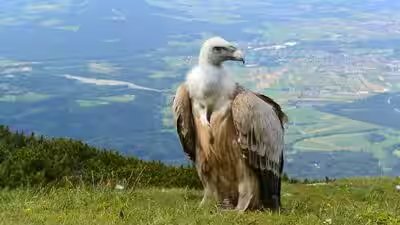
Why vultures don’t get sick from eating rotten meat; the remarkable adaptations that make them nature’s ultimate clean-up crew

Wondering how vultures can eat a carcass and not get sick? Well vultures may have one of the toughest diets in the animal kingdom but their bodies are built to cope. These birds can feed off carcasses that would make most animals dangerously sick, because their digestive systems are specially adapted to destroy harmful bacteria,…

Read More

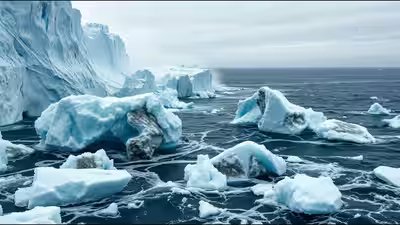
Arctic: Most ancient Arctic carbon entering the ocean gets buried instead of becoming greenhouse gas, study finds |

Representative Image of thawing Arctic permafrost releasing ancient carbon into coastal waters (AI-generated image) As Arctic permafrost thaws and coastlines erode, enormous quantities of ancient carbon that has sat frozen in the ground for thousands of years are being carried into the sea. Scientists have long worried that microorganisms in the ocean would break this…

Read More

Wolfsbane and larkspur can paralyse in tiny doses; scientists found six enzymes that could help turn their chemistry into future medicines

Some of the world’s most dangerous plants may also be among its most useful. Researchers have now identified a key set of enzymes in wolfsbane and larkspur that could help scientists recreate difficult-to-synthesize natural compounds in the lab, opening new doors for future medicines.These plants are notorious because even tiny doses can cause neurotoxicity and…

Read More

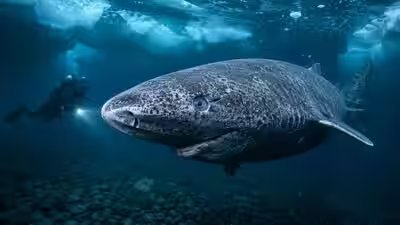
Scientists discover Greenland sharks can survive for centuries with functioning eyesight, overturning the long-held belief that they are blind |

Greenland sharks entered popular science writing on the strength of one number, 400 years. Some individuals swimming in the North Atlantic today were alive during Isaac Newton’s lifetime, born centuries before anyone thought to ask how old a shark could get. That figure alone would be enough to make the species a fixture of “strange…

Read More

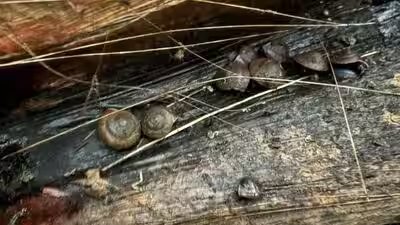
In 1996, Campbell’s keeled glass snail was declared extinct; 30 years later, more than 1,000 captive-bred snails have been returned to Norfolk Island

Photo by: Taronga Conservation Society Australia A tiny snail once feared lost forever has just reached a major conservation milestone. More than 1,000 critically endangered Campbell’s keeled glass snails (Advena campbellii) have now been released onto Norfolk Island, marking the latest phase of a recovery program that has turned a presumed extinction story into one…

Read More

Scientists tracked global forest photosynthesis for 20 years and found species-rich forests improved faster; biodiversity loss could reduce the trend by up to 17% by 2050

Forests with more tree species appear to be improving faster over time, according to a new global study published in Nature Climate Change. doi.org/10.1038/s41558-026-02698-7By tracking forest photosynthesis across two decades, researchers found that biodiversity does more than support healthy ecosystems in the present: it also helps forests strengthen their ability to absorb carbon as the…

Read More