


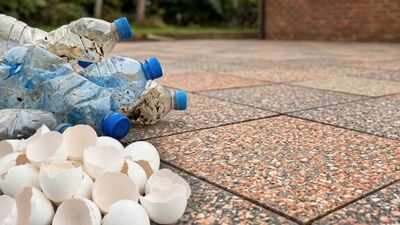
Researchers have developed paver tiles made entirely from waste materials by combining discarded PET plastic, eggshell powder, and river sand. The study explores a different way of making construction tiles by using melted PET plastic as the main binding material instead of cement.Eggshell powder and river sand were added as fillers to form the composite material. The researchers tested several combinations of the three waste materials to examine their physical and mechanical properties.According to research published in the Journal of Materials Science: Polymers titled ‘Fully waste-derived PET-eggshell-sand composite paver tiles: processing, microstructure, and mechanical performance’, researchers found that the resulting tiles were suitable for pedestrian areas and light-traffic applications.
How researchers made paver tiles from waste plastic and eggshells
The researchers used three materials to produce the paver tiles: waste PET plastic, eggshell powder and river sand. Unlike conventional pavers, the new tiles did not use cement as the binding material. Instead, the PET plastic was melted and used as the matrix that held the other materials together. The waste plastic was first sorted, shredded, washed, and dried before processing.Eggshells collected from cafeteria waste were cleaned, boiled, dried, and ground into powder. The river sand was also washed and dried to remove unwanted material. The prepared ingredients were then combined and stirred into the melted plastic. The mixture was poured into moulds, compacted, and cooled. After the material solidified, the researchers removed the samples from the moulds and tested their properties.
PC: Journal of Materials Science: Polymers
How did the different material combinations affect the tiles
The researchers tested different combinations of PET plastic, eggshell powder, and river sand to determine how the materials affected the finished tiles. Among the formulations examined, a mix of 70% PET, 20% eggshell powder and 10% river sand produced the strongest results. This formulation showed greater resistance to bending and compression than the other formulations tested.It also showed lower water absorption than formulations containing more eggshell powder or river sand. The findings note that the amount of each material affects the final performance of the composite. The researchers identified the selected formulation as suitable for pedestrian and light-traffic applications.
What did microscopy reveal about the paver tiles
The researchers examined the internal structure of the tiles using microscopy. The strongest formulation showed a compact and relatively uniform structure, with the eggshell powder and river sand distributed within the PET matrix. The researchers also observed strong bonding between the plastic and the filler materials.Other formulations showed features such as cracks or less effective bonding between the materials. These differences were linked to changes in the proportions of PET, eggshell powder, and river sand. The study found that the PET matrix could surround and hold the filler materials together to form a cohesive composite. This structure contributed to the mechanical performance of the tiles.
The composite tiles showed potential for pedestrian and light-traffic use
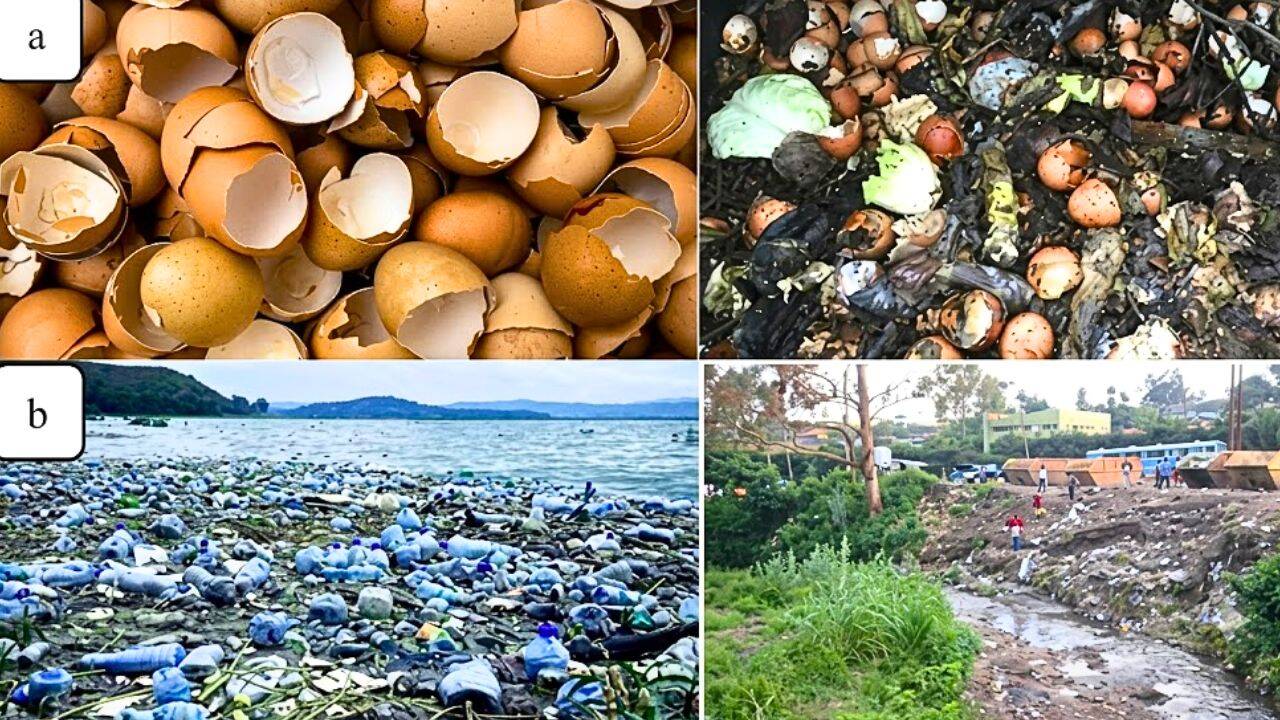
The study presents the composite pavers as an alternative way to use waste PET plastic and eggshells that might otherwise be discarded. The researchers noted that plastic and eggshell waste can contribute to environmental pollution when poorly managed. Turning these materials into construction products could provide another use for waste while reducing the need for conventional materials.The study indicates that the developed composite tiles were suitable for pedestrian and light-traffic applications. The researchers also noted that further work would be needed to examine areas not covered by the study, including long-term durability, abrasion resistance, cost analysis, and life-cycle assessment.


