


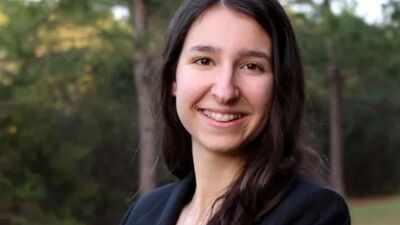
Eighteen-year-old Isabel Garcia from Wilmington, North Carolina, has been awarded a $25,000 Davidson Fellows Scholarship for a research exploring whether bacteria taken from corals could help control the bacteria responsible for cholera. Her project examined 4 coral bacteria and found that 3 showed potential for inhibiting Vibrio cholerae, including strains linked to the 7th and potential 8th cholera pandemics. According to the Davidson Institute, Garcia’s work focuses on addressing the bacteria in water reservoirs, where targeting the pathogen could offer another possible approach to cholera prevention.
How Isabel Garcia found 3 coral bacteria that could block cholera-causing bacteria
Garcia’s project focused on Vibrio cholerae, the bacterium that causes cholera. The Davidson Institute states that about 1.8 billion people worldwide are at risk from the preventable diarrhoeal disease, which continues to persist partly because of a lack of effective water sanitation methods.Garcia became interested in the issue because of stories she heard from her grandmother about cholera outbreaks near the border of the Dominican Republic and Haiti. She later became concerned about the possible return of Vibrio cholerae serogroup O139, a strain that had raised concerns about a possible 8th cholera pandemic, as reported by the Davidson Institute. Rather than looking only at conventional ways of dealing with the bacteria, Garcia explored whether marine bacteria isolated from corals could work as probiotics against Vibrio cholerae.Garcia investigated 4 coral bacteria named McH1-7, OfavHM2-11, OfavHM2-17 and McHM3-18. Her experiments examined how effectively each could inhibit strains of Vibrio cholerae.The Davidson Institute reports that three of the four bacteria showed significant effectiveness. McH1-7, OfavHM2-11 and McHM3-18 were identified as probiotic candidates capable of inhibiting Vibrio cholerae in both solid and liquid environments.The fourth bacterium, OfavHM2-17, did not show the same level of effectiveness. Garcia also compared the coral bacteria with chloramphenicol, which was used as the positive control in her experiments. These comparisons helped her identify the three bacteria that showed the strongest potential.
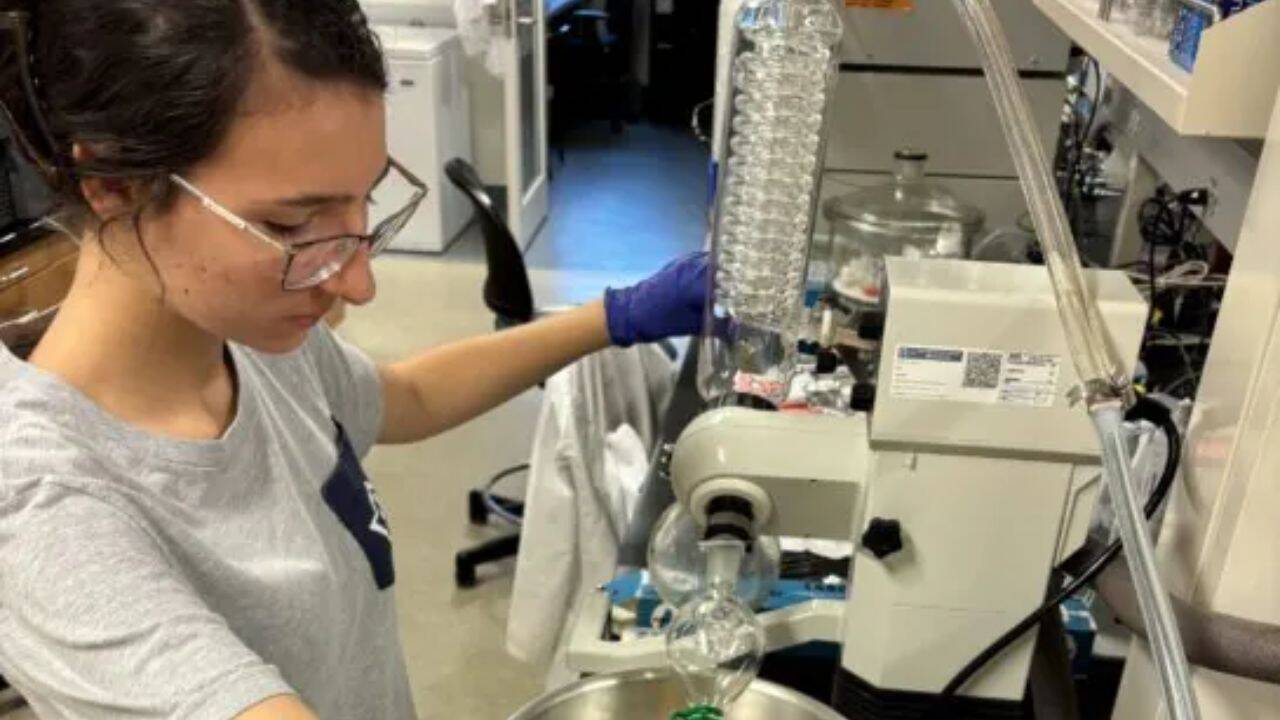
Davidson Institute describes Isabel’s research as having potential to help prevent or halt a possible 8th cholera pandemic by targeting Vibrio cholerae in water reservoirs. Image Credit: Davidson Institute
The new coral bacteria could target cholera at the source
One important part of Garcia’s project is where the coral bacteria could potentially be used. Her research does not focus only on treating people after infection. Instead, it looks at Vibrio cholerae in environmental reservoirs, including water where the bacteria can persist.According to the Davidson Institute, McH1-7 could be particularly useful on solid environmental surfaces, including copepods and other organisms that Vibrio cholerae is known to inhabit or infect.Garcia found that the supernatants from McH1-7, OfavHM2-11 and McHM3-18 could potentially be used against free-floating forms of Vibrio cholerae in water reservoirs. In simple terms, the findings point towards an approach that could address the pathogen before it reaches people.
Importance of three bacteria in cholera prevention
Garcia’s findings do not establish that the 3 coral bacteria can be used as a finished water-treatment method. Instead, they identify possible candidates for further research.The Davidson Institute describes the results as having potential to help prevent or halt a possible 8th cholera pandemic by targeting Vibrio cholerae in water reservoirs. The research is particularly focused on serogroup O139, whose future spread and impact remain an area of concern in Garcia’s project.For Garcia, the significance of the work comes from the possibility of addressing contamination at its environmental source. Her research suggests that naturally occurring marine bacteria could provide another avenue for scientists to investigate, when considering ways to limit cholera-causing bacteria in water.
How Isabel’s coral bacteria research earned national recognition
Garcia was named a 2026 Davidson Fellow and received a $25,000 scholarship. Her project was recognised in the science category alongside other 2026 Fellows. Her research has also received 4 Grand and Special Awards at the Regeneron International Science and Engineering Fair, according to her Davidson Institute profile.Beyond research, Garcia has taken part in science education and community activities. She helped launch the National STEM Festival Student Council, leads RxRecycle’s Wilmington operations and runs a free tutoring service for Hispanic students and adults in her community.


