


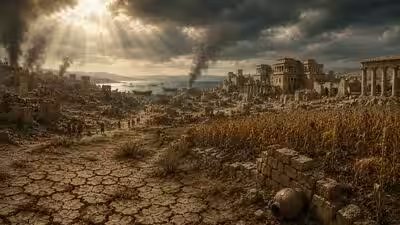
Around 1200 BCE, several of the eastern Mediterranean’s most powerful civilisations, including the Mycenaean kingdoms, the Hittite Empire, Canaanite city-states and parts of New Kingdom Egypt, began experiencing a period of dramatic decline. Historians have long debated whether warfare, invasions, earthquakes, internal unrest or climate change played the biggest role in this Bronze Age collapse. Now, a new study published in Science Advances has reconstructed regional climate conditions during this pivotal period finding that prolonged drought likely placed severe pressure on societies already facing multiple challenges.Using climate simulations alongside geological and paleoclimate records, the researchers reconstructed rainfall patterns across the eastern Mediterranean between roughly 1500 and 1100 BCE. Their findings suggest that a sustained decline in rainfall around the end of the Late Bronze Age would have significantly affected agriculture, food security and political stability across the region.
A clearer picture of the ancient climate
In order to understand the environmental context of the collapse of the Bronze Age, the scientists used a combination of several paleoclimate datasets, such as data contained in lake sediments, caves, and marine sedimentary archives, together with climate modeling techniques. This made it possible for them to reconstruct hydroclimate regionally, rather than individually at different archaeological sites. The study identified a prolonged period of reduced precipitation beginning in the late 13th century BCE. Winter rainfall, which was essential for farming across much of the eastern Mediterranean, declined across several parts of the region. Rather than representing a few isolated dry years, the reconstruction points to a sustained shift toward drier conditions. According to the researchers, this prolonged drying would have reduced water availability and lowered agricultural productivity in societies that depended heavily on seasonal rainfall.
Drought placed pressure on complex societies
Agricultural production was the key economic sector for the kingdoms during the Bronze Age. Wheat and barley needed consistent rainfall in winter, and they had to depend upon the surplus from agricultural production to meet the needs of increasing population, army, and administration system.According to the researchers, persistent drought resulting in bad harvest might have caused famine, financial crisis, and resource competition. The same factors might also have affected the trade routes linking the kingdoms in the eastern Mediterranean region.Climate change is not considered to be the only reason for the Bronze Age collapse in this study. Drought rather worked as a “threat multiplier” and exacerbated preexisting problems.
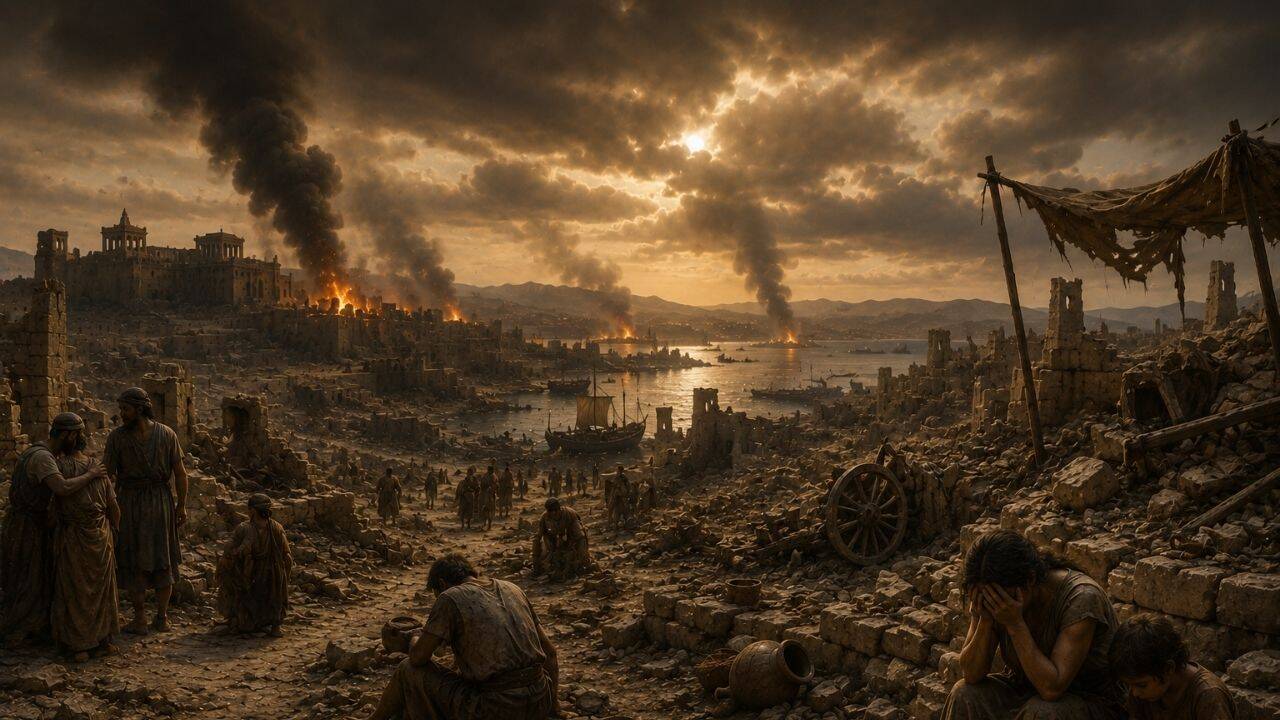
Representative Image (AI-generated)
A collapse driven by multiple factors
The end of the Late Bronze Age witnessed the decline of several major civilisations within a relatively short period. The Hittite Empire disappeared, many Mycenaean palace centres were destroyed, numerous cities in the Levant were abandoned and regional trade networks weakened considerably.For decades, scholars have proposed several explanations, including warfare, internal rebellion, earthquakes, economic disruption and the movements of the so-called Sea Peoples. The new study supports a more integrated explanation. Rather than attributing the collapse to a single event, the researchers argue that prolonged environmental stress likely interacted with these existing crises. Drought would have reduced the resilience of kingdoms making them less capable of responding to conflict, migration and political instability.
Why this reconstruction matters
One of the study’s most significant contributions is its regional perspective. Previous research often focused on evidence from a single site, making it difficult to determine whether drought was widespread or localised.Using multiple paleoclimate data points together with climate models helped the scientists prove a regional tendency to drying in the region involving several civilisations at once. Since these civilisations were connected through trade and diplomacy, the destabilisation of one civilisation might have led to destabilisation of others.Thus, the results also underline the need to study environmental changes along with archaeological and historical sources. The climate by itself is not enough to explain the collapse of civilisations, but understanding the climate history allows for conclusions about environmental pressures on civilisations.
Understanding the past to inform the future
While the scientists emphasise that there is no cause to draw direct parallels to the present-day situation, the paper highlights how long periods of climate-related pressure can increase the vulnerability of even complex and advanced societies. Bronze Age civilisations in the eastern Mediterranean were tightly interlinked in terms of trade, politics and agriculture. In the case of declining levels of rainfall for a prolonged period of time, these links became more and more vulnerable while at the same time political tension increased. This study provides one of the most detailed explanations of the climate of the period preceding the Bronze Age collapse. It reveals that the sharp changes of about 1200 BCE were not caused by a single factor but by a number of factors.


