


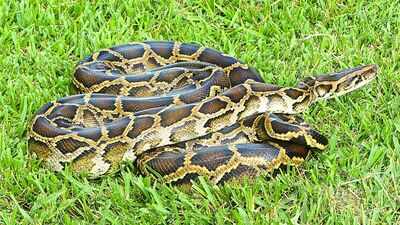
Scientists have developed an environmental DNA test that can detect four invasive constrictor snakes in Florida from a single sample. The tetraplex digital PCR assay was designed to identify Burmese pythons, northern African pythons, boa constrictors, and rainbow boas, which overlap in distribution and habitat in South Florida. The study found no cross-amplification among the four target species, allowing the test to distinguish them accurately.Tests using Burmese python environmental DNA detected the snake in water within five minutes of exposure and in soil for up to two weeks after removal. The research, published in Ecology and Evolution titled ‘Development of a Tetraplex Digital PCR Assay for the Detection of Invasive Snake Species in Florida, USA’, says the method can support faster detection and monitoring.
New test detects Burmese pythons and three other invasive snakes in one sample
Researchers from the University of Florida developed a tetraplex digital PCR assay that the study describes as the first of its kind for snakes. The test targets four invasive constrictors found in Florida that are Burmese python (Python bivittatus), northern African python (Python sebae), boa constrictor (Boa constrictor), and rainbow boa (Epicrates cenchria). The assay was designed to detect environmental DNA from multiple target species in a single sample.The researchers tested each species-specific assay against its intended target and the other three snake species. All four assays amplified their intended species, while no cross-amplification was observed with the other three species. The study notes that this provides a way to detect multiple invasive snakes in a single sample while distinguishing the species that are present in Florida.
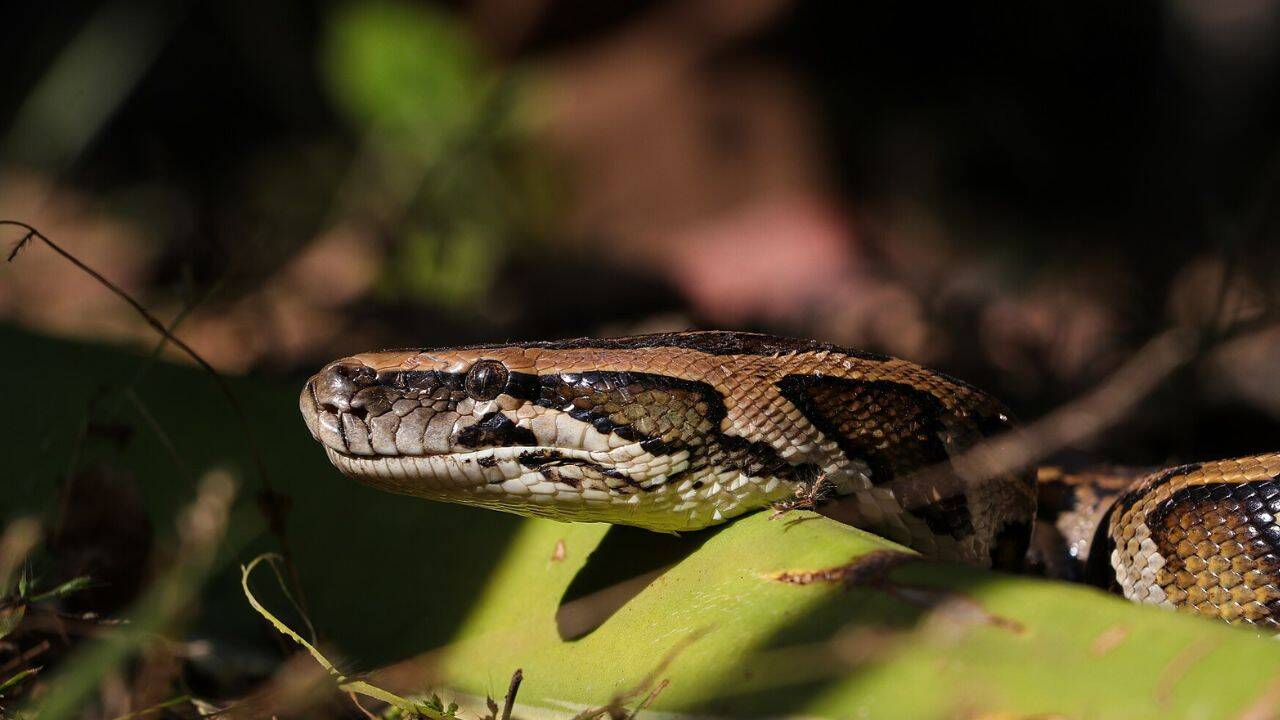
PC: Wikipedia
Testing the new method for identifying snake species
The researchers used the cytochrome c oxidase subunit I, or COI, barcoding region to design the species-specific assays. Initial testing produced a 621 base-pair product for each of the four snake species. They then tested the assays using quantitative PCR, screening each target assay against its corresponding species and the other three species. The results showed successful amplification in all three target replicates, with no cross-amplification of non-target species.The researchers also tested mixed samples containing combinations of two, three, or four species. The positive and negative patterns corresponded to the species present in each sample. At low concentrations, adding more species did not influence the assay, supporting its use for detecting mixed environmental samples in Florida.
Burmese python DNA was detected in water within five minutes
The study also tested whether Burmese python DNA could be detected in environmental samples after exposure to the snake. For water testing, a live female Burmese python was placed in a container filled with tap water. Water samples were collected at five minutes, 30 minutes, one hour, two hours, and three hours after exposure. All three replicates produced positive results, and Burmese python DNA was detected at five minutes in every replicate. For soil testing, samples were collected 24 hours, one week, and two weeks after a female Burmese python was removed from an outdoor enclosure.
How could the DNA test improve detection of invasive snakes
The findings point to possible uses for the assay in early detection, monitoring, and evaluation of removal efforts. The researchers note that visual encounter surveys have an estimated Burmese python detection probability of less than 5%, while an earlier eDNA study estimated a detection probability above 91%. The new tetraplex assay can test for four invasive constrictor species in a single sample, and help identify which species is present when sightings are uncertain. The researchers also say it can support monitoring after removal by checking for continued DNA detection.


