






Headlines

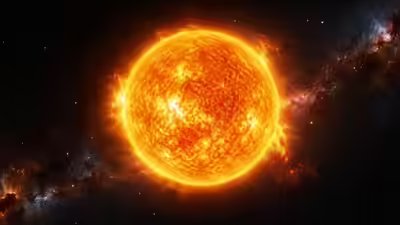
Nasa confirms the Sun has reversed its decades-long weakening trend after 2008; study finds |

For nearly three decades, the Sun seemed to be winding down. Sunspot counts fell, the solar wind weakened, and by 2008 our star had reached its faintest measured state since satellites began watching it. Astronomers braced for a repeat of history’s great solar lulls, centuries-long stretches when the Sun barely stirred. Then, quietly, the numbers…

Read More

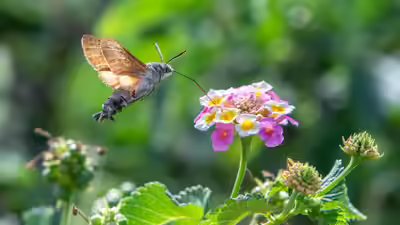
Hummingbird hawkmoths may have their own version of being left-handed or right-handed, using one preferred eye and one side of their long proboscis together to search flowers

Credit: Erik Karits from Pexels Hummingbird hawkmoths may have their own version of being left-handed or right-handed, using one preferred eye and one side of their long feeding tube together to search flowers for nectar.The discovery, made by a team of biologists at the University of Konstanz, shows how creatures with small brains save mental…

Read More

Jeff Bezos is secretly funding a mechanical clock inside a Texas mountain. Designed to run for 10,000 years it will play over 3.5 million unique sequences and challenge the scale of human time |

Out of everything that Jeff Bezos could be funding, a mechanical clock does not come to mind. But it seems some clock has been ticking in the mind of the Amazon founder who is quietly supporting the construction of a 10,000-year clock inside a Texas mountain.The work is called the Clock of the Long Now…

Read More

Inner Mongolia: In 2005, scientists began reshaping an Inner Mongolia grassland; years later, plant-eating insects emerged as its strongest biological buffer

Herbivore species dynamics is key to grassland food web stability In 2005, scientists began reshaping a semi-arid grassland in Inner Mongolia by changing its mix of plants. Years later, when researchers checked how the local food chain held together, plant-eating insects emerged as its strongest biological buffer.The long-term study, published on 18 July in the…

Read More

The nonvenomous king ratsnake eats deadly cobras and vipers; scientists have now mapped its genome to investigate how it survives their venom

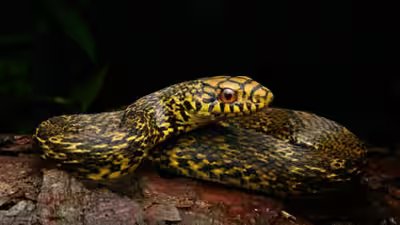
King ratsnake is known for hunting and eating deadly venomous snakes (Inaturalist photos) A nonvenomous snake that regularly hunts and eats some of the world’s most dangerous venomous snakes has given scientists a new mystery to solve. Researchers have now mapped the genome of the king ratsnake to understand how it survives the venom of…

Read More

Most scuba divers believed they rarely touched reefs; underwater observers found more than 40% of contacts caused visible damage

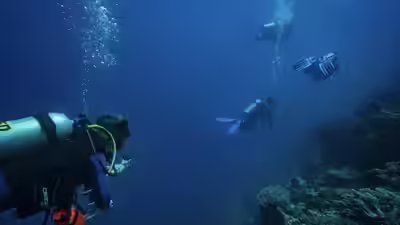
A researcher following scuba divers for this project Most scuba divers believe they rarely touch fragile seabed ecosystems, yet underwater observers tracking hundreds of tourists found that more than 40 per cent of their physical contacts caused visible damage to living coral structures.Research published in The Conversation by marine scientists and dive professionals revealed that…

Read More

Around 1200 BCE, major Mediterranean civilisations began collapsing; scientists have now reconstructed the climate conditions surrounding the crisis

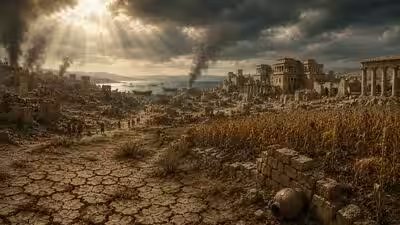
Representative Image (AI-generated) Around 1200 BCE, several of the eastern Mediterranean’s most powerful civilisations, including the Mycenaean kingdoms, the Hittite Empire, Canaanite city-states and parts of New Kingdom Egypt, began experiencing a period of dramatic decline. Historians have long debated whether warfare, invasions, earthquakes, internal unrest or climate change played the biggest role in this…

Read More

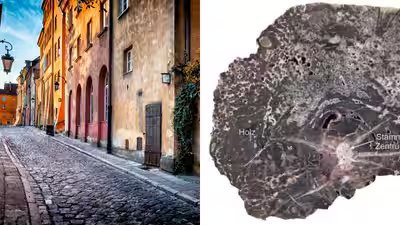
A piece of Europe 5 km down, heated to 240°C and later returned to the surface. How? Fossilised wood shows

How Fossilised wood shows the history of Europe Imagine you are holding a piece of fossilized wood. It might, at first sight, seem to be nothing more than a well-preserved relic of some ancient forest. But within its crystalline framework is a geological diary, quietly recording the rise and fall of continents, extreme underground temperatures…

Read More

Elon Musk says a future on Mars could help humanity survive pandemics, AI and global disasters |

Elon Musk has expanded on his long-standing vision of making humanity a multi-planet species, arguing that a self-sustaining colony on Mars could serve as a crucial safeguard against civilisation-ending catastrophes on Earth. Responding to a debate on X (formerly Twitter), Musk said his views had been misunderstood, emphasising that he has never claimed Mars would…

Read More

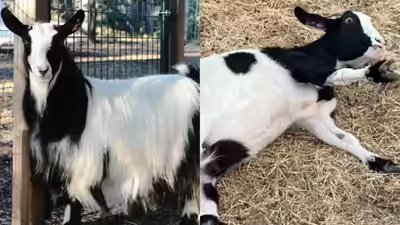
A baby goat jumps from a small staircase, freezes with all four legs stiff and topples over; an inherited muscle condition explains why

When surprised, a myotonic goat’s muscles briefly stiffen, sometimes making it fall over. A viral video that has received more than 5.4 million likes shows a baby goat jumping down from a small staircase before suddenly freezing with all four legs stiff and toppling over. Within seconds, it gets back on its feet and starts…

Read More