


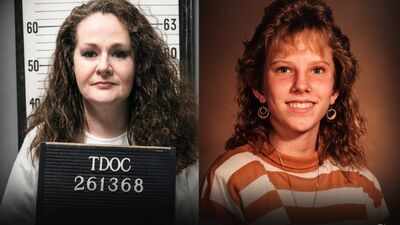
For more than three decades, May Martinez lived with the same date burned into her memory: January 1995, when her 19-year-old daughter, Colleen Slemmer, was tortured and murdered.On September 30 this year, Martinez travelled 11 hours from Florida to Tennessee with her husband to witness what she believed would finally be the closing chapter. Christa Pike, the woman convicted of killing her daughter, was scheduled to die by lethal injection at Riverbend Maximum Security Institution.Pike was 18 when she killed Slemmer. Now 50, she was about to become the first woman executed by Tennessee in more than 200 years.Martinez and her husband arrived at about 8:30 in the morning and waited nearly 12 hours inside the prison before the death chamber finally opened.Inside the chamber, Pike was strapped to a gurney. An IV had been placed in her arm. A spiritual adviser stood near her head, speaking softly to her. They sang together. Pike smiled, raised her head and looked around.Martinez stood behind the glass with a photograph of Colleen. “I stood in front of that window, and I watched her very, very carefully. I did not take my eyes off of her,” Martinez later said. She wanted Pike to remember the young woman whose life had ended three decades earlier.At around 7.37 pm, the execution began.
The botched execution
Pentobarbital, a powerful barbiturate that Tennessee uses as its sole lethal-injection drug, was administered through the IV.But Pike did not die. Witnesses heard her make snoring sounds.Shocked officials huddled to discuss the unprecedented situation before finally deciding to administer a second dose.But Pike remained alive.
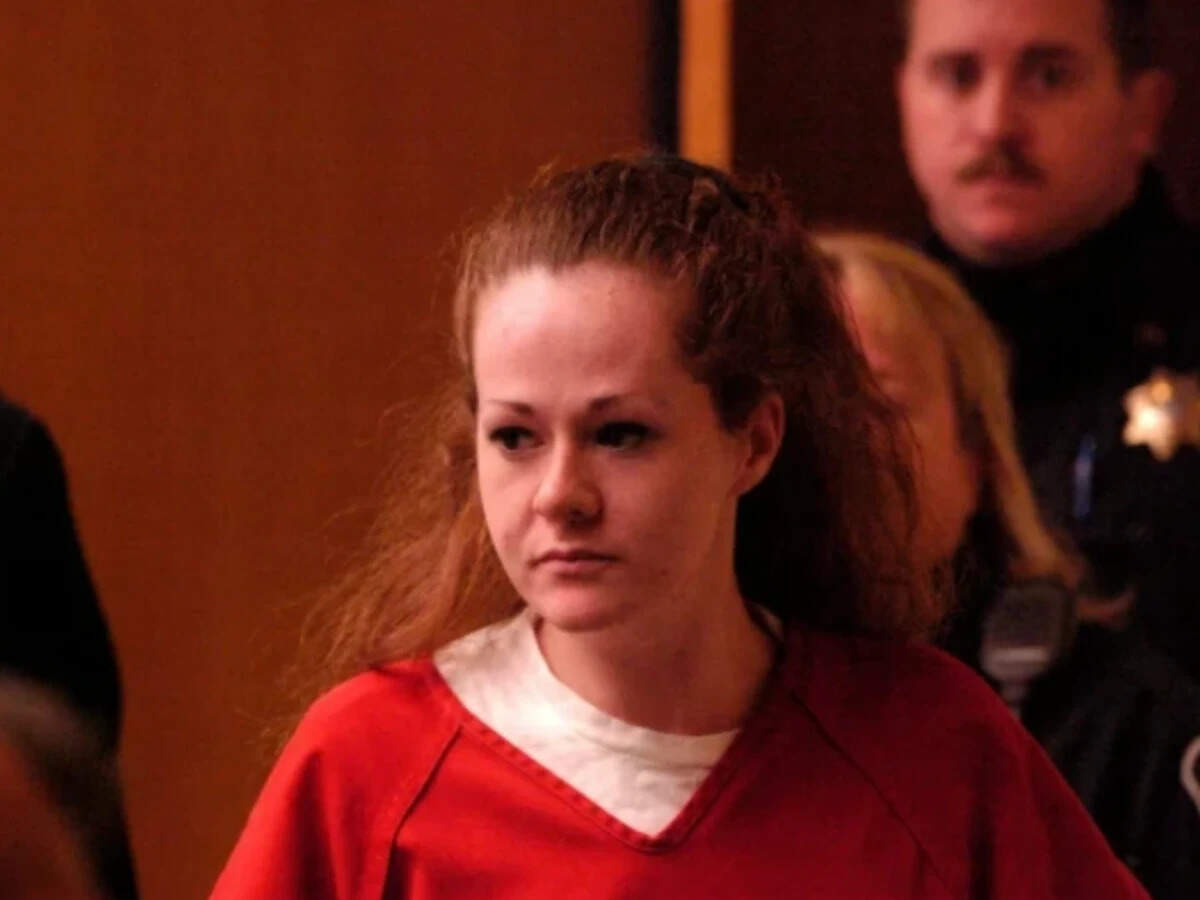
Is Christa Pike still alive?
The scene had become an extraordinary inversion of what a modern execution is supposed to be: controlled, clinical and final. Instead of a body being taken away for burial, an ambulance was summoned. Instead of the state declaring a death, Pike was transported to a hospital for emergency medical treatment.And May Martinez left without the ending she had travelled hundreds of miles and waited decades to witness. “I broke down in tears,” Martinez later said, describing the moment she watched Pike lying on the table, talking, laughing and lifting her head. “I think that the state owes me a big apology.”
A haunting question
Since the botched execution, Pike has remained unconscious and on a ventilator.And a critical question now haunts Tennessee.How could a procedure designed to make killing appear precise, medical and almost mechanical unravel so completely.The precise reason for the failed execution remains under investigation. Pike’s lawyers say problems with the IV lines meant the pentobarbital entered surrounding tissue instead of the bloodstream. They had previously warned courts about difficulties accessing her veins.The Tennessee department of correction, however, has said its personnel followed the state’s execution protocol.
The fallout has already reached the top of Tennessee’s prison system. Governor Bill Lee has halted executions in the state for the remainder of 2026 and appointed former US attorney Ed Stanton to independently review what happened.Department of Correction commissioner Frank Strada will resign later this month.
What is the Colleen Slemmer case ?
On a January night in 1995 at Knoxville’s Job Corps Center in Tennessee, 18-year-old Christa Pike, her boyfriend Tadaryl Shipp and another student, Shadolla Peterson, attacked 19-year-old Colleen Slemmer. Prosecutors said the killing was an act of jealous rage triggered by romantic conflict.According to court records, the assault lasted roughly 30 to 45 minutes and involved repeated cutting, blows to Slemmer’s head and the carving of a pentagram into her chest. The brutality of the crime shocked Knoxville.Pike was convicted of first-degree murder and conspiracy to commit first-degree murder. The jury found that the murder involved torture or serious physical abuse beyond what was necessary to cause death.Pike was sentenced to death, becoming one of the youngest women in the US to be sent to death row. After several rounds of appeals Pike’s execution was ultimately scheduled for September 30, 2026.
What exactly is lethal injection?
Lethal injection is not one fixed recipe.Dr Thirunavukkarasu Sivaraman, lead consultant – Anaesthesiology & Pain Management at the SPARSH Hospital in Bengaluru said, “The three-substance injection technique was initially aimed at bringing unconsciousness followed by paralysis of respiratory muscles and finally the heart stopping. Other states have chosen to adopt the one-substance injection that involves the administration of a substance called pentobarbital with the intention of causing extreme CNS depression followed by respiratory arrest and finally death. This process is not supposed to induce painlessness but rather pain.
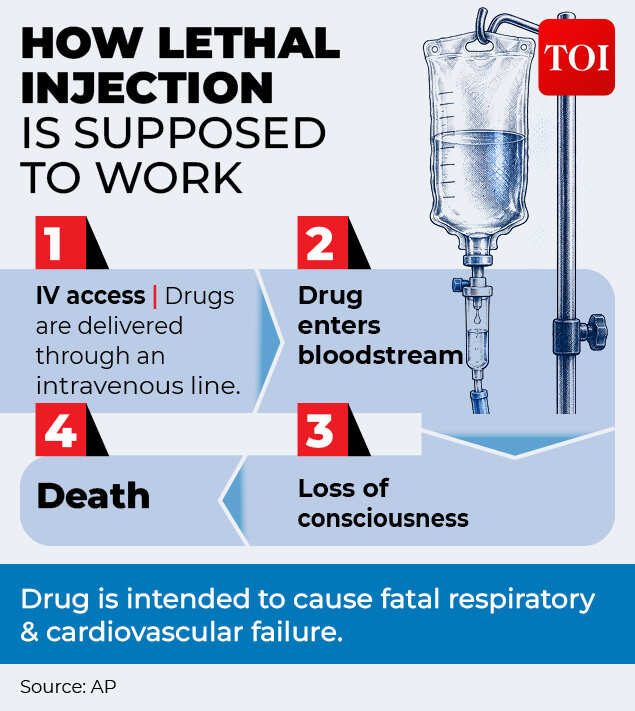
This is how lethal injections work
The modern US era began in Texas. Charles Brooks Jr was executed by lethal injection on December 7, 1982, using sodium thiopental.The method was conceived as a more clinical alternative to execution by electrocution, and its supporters presented it as a swift and humane method.But the procedure depends on something deceptively basic: getting the drug into the bloodstream.
So how can a lethal injection fail?
A lethal drug can only have its intended systemic effect if it is delivered correctly. One potential problem is intravenous access. If a needle or catheter is not properly positioned in a vein, medication can enter the surrounding tissue instead of circulating through the bloodstream. A vein can also rupture, collapse or become unusable during the procedure.That is particularly significant in Pike’s case because her lawyers have specifically alleged problems with the IV lines. Her former lawyer James Crowson told The Guardian that previous legal filings had raised concerns about Pike’s veins and that he was not surprised the procedure encountered difficulties.
The problem is not unique to Pike
According to the Death Penalty Information Center, 51 US lethal-injection executions since 1976 have been classified as botched, including seven halted because officials could not establish an IV line. Before Christa Pike, no prisoner in the modern era was known to have survived after lethal-injection drugs were administered. Seven others survived failed attempts, but in each case, no drugs were given. Clayton Lockett’s 2014 Oklahoma execution bore similarities, though he died of a heart attack in the execution chamber.In Tennessee, the issue had surfaced before Pike. In May, officials halted the execution of Tony Carruthers after they were unable to establish a secondary IV line.
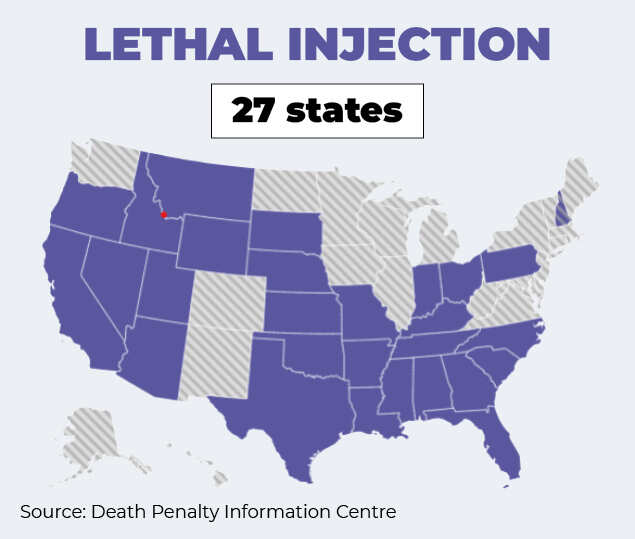
How many US states authorise lethal injection
Does two doses mean the drug did not work?
Not necessarily.The failure of an execution does not establish that pentobarbital itself was ineffective. Investigators have to determine how much drug entered Pike’s bloodstream, how much may have entered surrounding tissue and whether the execution protocol was followed correctly.That distinction is crucial.A drug can be pharmacologically capable of causing death while a particular administration fails because delivery is compromised. In Pike’s case, however, officials have not publicly established what happened to the two doses.Dr Sivaraman said, “The number of times a drug is injected does not determine the amount of the active ingredient in the bloodstream. In case the IV tubing drips outside the blood vessel, the drug may fail to be absorbed, thus causing injury to the affected tissues. This would mean that giving the drug another time would result in additional injury with no visible results since it did not have the immediate effects.”The independent review ordered by Governor Lee is expected to examine precisely that question: whether Tennessee followed its protocol and whether changes are needed.
How often do executions go wrong?
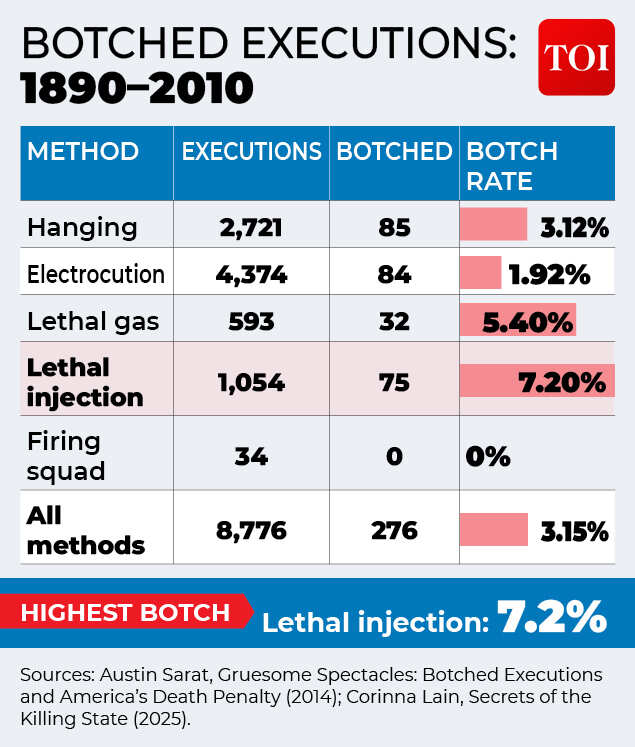
More often than the image of a controlled, clinical procedure might suggest.Research by Austin Sarat covering US executions from 1890 to 2010 found 276 botched executions among 8,776 executions – about 3.15%. Lethal injection had the highest botch rate among the methods examined: 75 out of 1,054 executions, or 7.2%.A botched execution does not necessarily mean the prisoner survives.Dr Manish Bharti, head of Critical Care Medicine, Anaesthesiology and Critical Care, Metro Group of Hospitals, Pike’s case could be due to insufficient administration of the medication or an interruption in the delivery process. He added, “Severe barbiturate poisoning can be reversible with emergency interventions such as ventilation. However, being alive does not necessarily mean the individual has fully recovered, as prolonged unconsciousness, lack of oxygen and associated injuries can cause long-term effects.”The Death Penalty Information Center says lethal injection has remained particularly vulnerable to complications involving intravenous access, changing drug protocols and difficulty obtaining execution drugs.The problem has not disappeared. The DPIC said seven of 19 US execution attempts in 2022 were botched, although the sample was small.
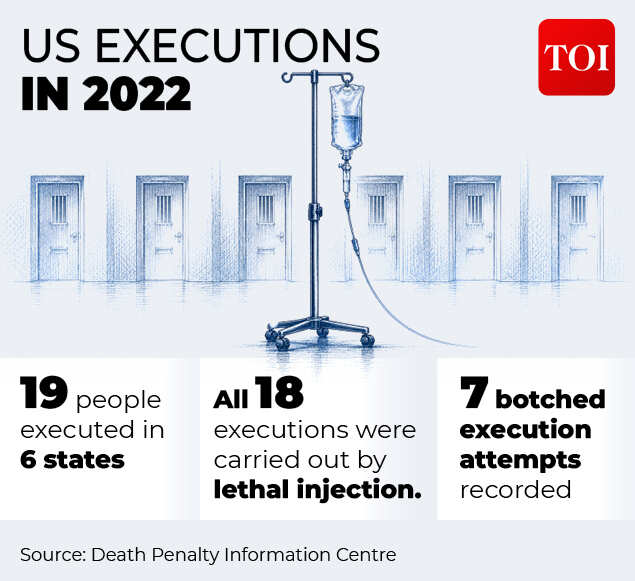
7 out of 20 (35%) execution attempts went wrong in 2022.
Why has lethal injection become more complicated?
The original drug model has become difficult to sustain.Pharmaceutical companies have increasingly restricted the use of their medicines in executions, making it harder for states to obtain some traditional drugs. States have consequently changed protocols, switched drugs and, in some cases, relied on compounding pharmacies.“This is a case that requires an independent and transparent inquiry to take place before any conclusions are reached or other executions take place”, said Dr Bharti, while also raising concerns about the recipe used in the preparation of the lethal drugs. He said, “Another concern is the issue of secrecy regarding the personnel and the process involved, making it hard for an independent check on the process. Tennessee had earlier conducted a study where there were violations of their own protocol.“The Death Penalty Information Center says these drug shortages and changes have contributed to legal challenges and prolonged executions, while secrecy laws in many states make it difficult for the public to know where execution drugs came from or how their quality was assessed.That has produced an unusual situation: a procedure designed to look medically precise is increasingly being carried out under rules that keep significant parts of the process away from public scrutiny.
Is lethal injection the most common method?
In the US, yes.The Death Penalty Information Center records 1,488 US executions by lethal injection since 1976 and says 28 states, along with the US government and military, authorise it.But lethal injection is not the only method available. Nine states authorise electrocution. Nine authorise some form of lethal gas, including nitrogen gas. Five, including Idaho, Mississippi, Oklahoma, South Carolina and Utah, authorise firing squads.Nitrogen gas has emerged as a relatively new US execution method. Alabama carried out the first nitrogen-gas execution in 2024, and Louisiana has since also used the method.Tennessee itself permits electrocution as an alternative under certain circumstances, and the Pike case has already prompted Republican lawmakers to discuss expanding execution options.
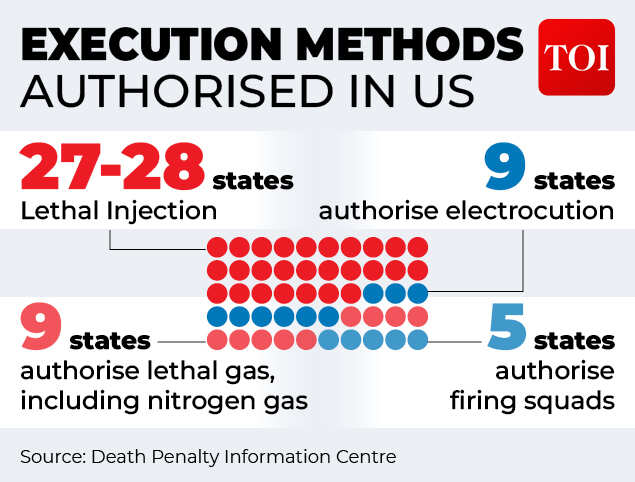
Primary and alternative methods of execution authorized across the United States
What happens in other countries?
Lethal injection is used far less widely worldwide than the US association with the method might suggest.Amnesty International recorded executions in 17 countries in 2025. The methods used included lethal injection, hanging, shooting, beheading and nitrogen gas asphyxiation.The US was responsible for 47 recorded executions in 2025. China remained the world’s largest executioner, although its figures are classified as a state secret. Amnesty also records extensive use of capital punishment in Iran and Saudi Arabia.
And India?
India retains the death penalty but does not use lethal injection. The Bharatiya Nagarik Suraksha Sanhita, 2023, provides that a death sentence is carried out by hanging “by the neck till he is dead”.The Supreme Court has repeatedly held that capital punishment should be reserved for the “rarest of rare” cases.India therefore sits outside the US debate over lethal injection itself, although the broader question – how the state should carry out an irreversible punishment- remains relevant to any capital-punishment system.


