







Headlines

Scientists trained 182 pet dogs to sniff out one of America’s most destructive invasive insects, and most successfully found its hidden eggs |

The spotted lanternfly has become one of the most destructive invasive insects in the United States, threatening vineyards, orchards and forests by feeding on the sap of hundreds of plant species. Finding its egg masses before they hatch is one of the most effective ways to slow its spread, but the eggs are well camouflaged…
Read More

In Indian Himalayas, a wild spice is helping 200 families protect 100 sq km of forest while generating an income of Rs 39 lakh

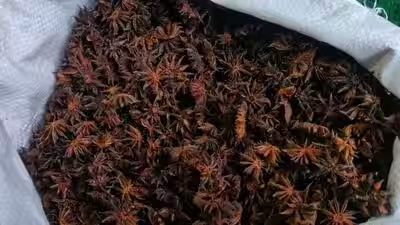
For generations, indigenous communities in Arunachal Pradesh had been using a spice in their food for its citrusy, tongue-tingling flavour. The native plant was a part of their world and that’s all they knew. But today, the small spice is helping 200 families gain a livelihood while also protecting agricultural land.On autumn mornings, residents of…

Read More

Scientists say massive Pacific Ring of Fire eruptions may have cooled Earth for centuries |

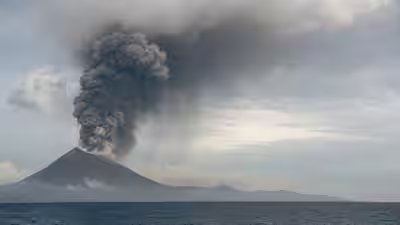
The Pacific Ring of Fire, the horseshoe-shaped belt of volcanoes circling the Pacific Ocean, may have played a far bigger role in shaping Earth’s past climate than previously understood. Findings show that some of the largest volcanic eruptions of the past 12,000 years, many originating from this seismically active region, align closely with major glacial…

Read More

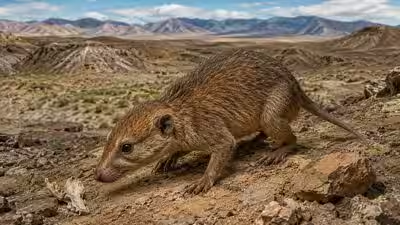
70-million-year-old mammal fossil discovered in Mongolia rewrites the story of early mammal evolution |

The fossil record has a habit of reshaping ideas that once seemed settled. In the Late Cretaceous, long before the extinction of the dinosaurs, small mammals occupied a world dominated by much larger reptiles. Most left behind little more than isolated teeth and fragments of bone, making it difficult to understand how they were related…

Read More

Quote of the day by Nikola Tesla: “The present is theirs; the future, for which I really worked, is mine” |

“The present is theirs; the future, for which I really worked, is mine.” — Nikola Tesla (AI-generated image) Two inventors can watch someone else take credit for their work in real time and respond in completely different ways. One spends what energy remains fighting for immediate recognition, determined to win the argument before it’s too…

Read More

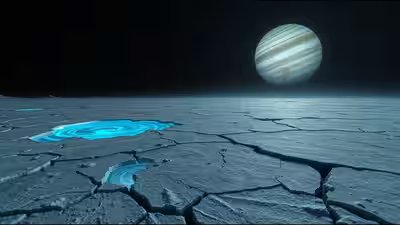
Europa may hold more water than Earth, but a new study suggests its hidden ocean is almost impossible to reach |

Representative Image of Europa’s hidden ocean beneath its icy surface (AI-generated image) Europa, one of Jupiter’s icy moons, may hold more liquid water than all of Earth’s oceans combined, sealed beneath a thick shell of ice. For years, one of the most promising ideas for studying that hidden ocean was that water rising through cracks…

Read More

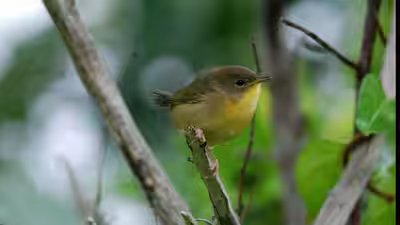
Female mammals usually outlive males, but a 27-year study found the pattern was reversed among dozens of North American bird species

Female birds have shorter lifespans than male birds, researchers find Female mammals usually live longer than males, but a 27-year study of North American birds has found the opposite pattern in birds.Researchers at the University of California, Los Angeles (UCLA) analyzed more than 563,000 bird-banding records and found that adult female birds had a 12.4%…

Read More

The Amazon’s zombie fungus manipulates ants into biting plants before death; scientists have now found it living silently inside mosses more than 10 metres away

An ant (Camponotus renggeri), infected by a fungus, bites into a liverwort plant while holding onto nearby moss with its claws.Photo: IMA Fungus journal The so-called zombie-ant fungus has long fascinated scientists because of the way it takes control of infected ants, forcing them to bite plants before they die. Now, researchers in the Amazon…

Read More

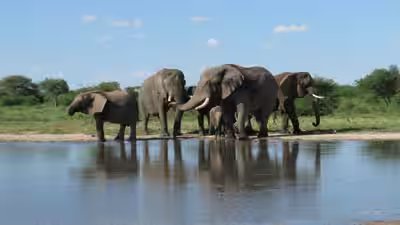
South Africa released 11 formerly captive elephants onto wild reserves; five years later, their behaviour closely matched elephants that had never lived in captivity

Rewilded elephants on Khamab Kalahari Reserve, who were observed during this research project (from left to right: Ngwedi, Mana, Michael, and Chikwenya) South Africa released 11 elephants that had spent years in captivity into protected reserves. Five years later, researchers found that their behavior was very similar to elephants that had always lived in the…

Read More

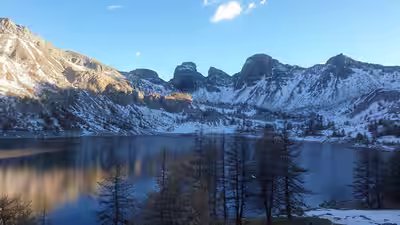
In 1924, Arctic charr from Lake Geneva were stocked into Lake Allos; a century later, their descendants showed distinct metabolic responses under identical conditions

Lake Allos (French Alps), the largest natural high-altitude lake in Europe and one of the two study sites for this research. Credit: Hervé Rogissart In 1924, Arctic charr from Lake Geneva were introduced into Lake Allos. A hundred years later, scientists found that their descendants had developed different metabolic responses, even when raised under the…

Read More