









Headlines

Meet Finnegan McGill, the 18-year-old Arizona student who spent four years building an AI device that can identify birds from their calls and pinpoint where they are |

Finnegan McGill. Image Credit: Chris Ayers/Society for Science Finnegan McGill has spent more than four years turning a concern about declining bird populations into a working piece of technology. This 18-year-old student from Tucson, Arizona, developed a device known as ‘A-BiRD’ (Automated Bird Recognition Device) which could help in identifying birds by their calls and…

Read More

Henrietta Lacks died at 31 in 1951, but her cells kept multiplying; the discovery that transformed medicine and helped save millions of lives

Henrietta Lacks (Image Credit: Wikipedia) In 1951, Henrietta Lacks, a 31-year-old African-American woman, was diagnosed with cervical cancer at Johns Hopkins Hospital in Baltimore. During her treatment, doctors removed tissue from her tumour for research without telling her or obtaining her permission. The cells behaved unlike any human cells scientists had successfully maintained before: they…

Read More

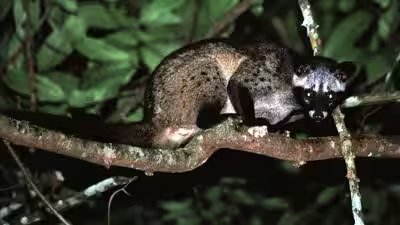
Coffee beans found in Civet poop used to make one of the world’s most expensive Kopi Luwak coffee which costs thousands of dollars per kilogram |

Asian palm civet. Image Credit: Bernard DUPONT/Wikipedia Kopi luwak is one of the world’s most unusual coffees because its production begins inside the digestive system of an animal. The coffee is made from beans eaten and later excreted by the ‘Asian palm civet,’ a small mammal found across parts of South and Southeast Asia. The…

Read More

Meet Arya Gurumukhi, the Texas student developing a ‘Bionic Leaf’ that uses sunlight, water and bacteria to make fuel |

A power cut in Texas left Arya Gurumukhi and her family without heat for days during the severe winter storm of 2021. She was young, but the experience stayed with her. The problem was no longer an abstract question about climate or energy systems. It was something she had experienced inside her own home. Gurumukhi…

Read More

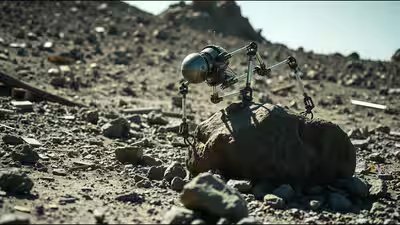
Meet Ankan Das, the 15-year-old Florida student who built a shape-shifting robot that crawls on Moon soil and squeezes through tight spaces |

Representative Image of a tensegrity robot navigating obstacles during a search-and-rescue mission (AI-generated image) Ankan Das is a 15-year-old sophomore at Oviedo High School in Florida, but his latest science-fair project looks more like something from a robotics laboratory than a school classroom. For his Regeneron International Science and Engineering Fair project, Das built a…

Read More

Antarctica holds more than 60% of the world’s meteorites, but warming could make thousands disappear into the ice |

Antarctica holds more than 60% of the world’s meteorites, but warming could make thousands disappear into the ice (PC: AI Generated) More than 60% of all meteorites ever found on Earth have been recovered from Antarctica, where dark rocks can remain exposed on bright blue-ice fields for thousands of years. Now, climate warming is putting…

Read More

Dutch plant turns 420,000 tonnes of poultry manure into renewable electricity for 45,000 households while recycling the leftover ash into fertiliser |

A Dutch plant is turning a huge agricultural waste stream into renewable electricity and fertiliser. BMC Moerdijk in the Netherlands processes around 420,000 tonnes of poultry manure each year, using thermal conversion to generate electricity for the farms supplying the manure and enough additional power for around 45,000 households. The process does not end after…

Read More

Meet Ella Lu, the 17-year-old North Carolina student who taught AI to recognise how Impressionist painters arranged objects in their paintings |

Ella Lu. Image Credit: Chris Ayers/Society for Science Ella Lu, a 17-year-old student from Chapel Hill, North Carolina, has found a way to bring two different interests of ‘art’ and ‘computer science’ together. As a senior at the North Carolina School of Science and Mathematics(NCSSM), Lu developed a system that can study how objects are…

Read More

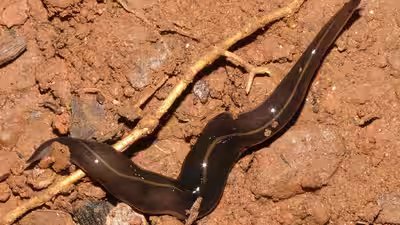
In the 1990s, a predatory flatworm was released in Samoa to control giant African snails; it later became linked to the decline and extinction of native island snails

In the 1990s, a predatory flatworm was released in Samoa to control giant African snails An aggressive predatory flatworm introduced to Pacific islands during the 1990s to control agricultural pests has pushed native land snail species toward extinction, turning a planned biological control program into an ecological disaster. The New Guinea flatworm (Platydemus manokwari) was…

Read More