


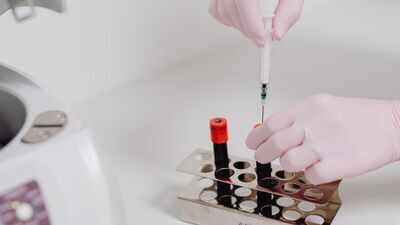
A new blood testing platform could make it easier to identify people who are genuinely allergic to amoxicillin, one of the most widely used penicillin antibiotics. Researchers tested 30 nanometre magnetic particles on blood samples from 94 people, including 50 patients with confirmed amoxicillin allergy and 44 who tolerated the drug. The experimental system detected allergic patients with 98 percent sensitivity, while the commonly used ImmunoCAP commercial test detected only about 17 percent in the same comparison. As reported by Phys.org, the technology uses tiny iron oxide particles coated with silica and molecular structures designed to capture allergy-related antibodies. The early results are promising, but the test still needs larger clinical studies and regulatory validation before it can replace existing diagnostic methods or influence routine prescribing.Why amoxicillin allergy is hard to diagnoseIf patients develop a rash, swelling, breathing problems or other symptoms after taking amoxicillin, their doctors may record a penicillin allergy in their medical history. That label can remain for years, even when the original reaction was caused by an infection, another medicine or a temporary condition. A reported allergy can influence future treatment decisions. Doctors may avoid penicillin antibiotics and prescribe alternatives that are broader spectrum, more costly or less suitable for the infection. Research has linked inaccurate penicillin allergy labels with increased healthcare use and a higher risk of antibiotic resistance.The difficulty is that confirming the allergy is not always simple. Skin tests and blood tests can miss genuine cases, especially when the level of drug-specific immunoglobulin E, known as IgE, is low. The most definitive approach may involve a supervised drug challenge, but that can carry risks for people who are truly allergic.A reliable blood test could help doctors identify more patients who need specialist evaluation and distinguish them from people who can safely receive penicillin based on further assessment.How the magnetic particles workThe particles used in the study are approximately 30 nanometres in diameter. A nanometre is one billionth of a metre, so the particles are far too small to see individually without specialised equipment.Each particle has a magnetic iron oxide core surrounded by a silica coating. The surface is then modified with dendrimers, branched molecular structures that provide multiple attachment points. Researchers attach amoxicillin-related molecules to those structures so the particles can interact with antibodies in a blood sample. When blood serum is mixed with the particles, antibodies that recognise amoxicillin can bind to the drug molecules on the particle surface. A magnetic field can then collect the particles, separating the captured material from the rest of the sample.This design increases the effective surface area available for detection. It also allows researchers to manipulate the particles magnetically, making it easier to concentrate the relevant antibodies and analyse them.The test is not trying to create an allergic reaction in the patient. It analyses a blood sample in the laboratory for antibodies associated with immediate amoxicillin allergy.The 94 sample comparisonThe research team analysed blood from nearly 100 people. The group included 50 patients with confirmed amoxicillin allergy and 44 people who tolerated amoxicillin and other beta lactam antibiotics.The experimental magnetic nanoparticle platform was compared with established testing methods, including ImmunoCAP, the most widely used commercial blood test, and conventional radioallergosorbent testing, often called RAST.For amoxicillin, the nanoparticle system achieved 98 percent sensitivity and 100 percent specificity in the reported analysis. ImmunoCAP showed about 17 percent sensitivity and 100 percent specificity. A conventional polymer-based test had about 38 percent sensitivity and 98 percent specificity. Sensitivity refers to the ability of a test to correctly identify those who are truly diseased. A sensitivity of 98 percent means that the experimental method identified nearly all confirmed allergic patients in this sample. Specificity refers to the ability of a test to correctly identify those who are truly not diseased. A specificity of 100 percent means that the test did not misclassify tolerant participants as allergic in the study group. Both measures matter. A test that misses genuine allergy can create a false sense of safety, while a test that wrongly labels tolerant patients as allergic can restrict treatment choices unnecessarily.Why higher sensitivity mattersThe low sensitivity of some existing blood tests is a major problem. If a test detects only around 17 percent of genuinely allergic patients, a negative result cannot reliably rule out allergy.Patients may then need additional testing or supervised drug challenges. This uncertainty may still drive clinicians to avoid amoxicillin in some situations. A more sensitive test could help identify those who need closer assessment and reduce the number of false negatives. The benefit could be particularly important for patients with a history of severe reactions. Missing an allergy in someone at risk of anaphylaxis could have serious consequences if the drug is prescribed without appropriate precautions.At the same time, a high sensitivity result in an early study does not automatically mean that the test will perform equally well in ordinary clinics. The samples may not represent the full diversity of patients, the allergy histories may have been carefully confirmed and the laboratory conditions may be more controlled than routine practice.Larger studies must test the platform in different hospitals, age groups, ethnic populations and types of allergic reaction.A blood test is not the whole diagnosisDrug allergy is clinically diverse. Some reactions happen within minutes and are driven by IgE antibodies. Others occur hours or days later and involve different immune mechanisms. A test designed to detect amoxicillin-specific IgE may be most useful for immediate allergic reactions, not every possible adverse response.A rash caused by a viral illness or a delayed immune reaction may not produce the same antibody pattern. Likewise, some people may have a history that strongly suggests allergy even if a blood test is negative. Doctors therefore interpret test results alongside the patient’s symptoms, timing, medical history and previous exposure. A blood test can provide valuable evidence, but it is not a complete substitute for clinical evaluation.The new nanoparticle platform is best understood as a promising laboratory tool. It may improve one part of the diagnostic process, especially the detection of drug specific IgE, while leaving other aspects of diagnosis to specialists.The role of magnetic separationMagnetic nanoparticles are already being studied in medicine for biosensing, targeted drug delivery, imaging and separation of biological molecules. Their magnetic cores allow researchers to collect them quickly without relying only on centrifugation or complex filtration.In allergy testing, the particles can act as a concentrated platform for presenting drug-related molecules to antibodies. If the relevant antibodies are present at very low levels, concentrating them may make them easier to measure.The silica coating also provides a stable surface that can be chemically modified. The dendrimer layer gives researchers multiple points for attaching molecular probes, increasing the chance that antibodies will encounter a matching target. The technology’s success depends on precise chemistry. The attached molecules must resemble the part of amoxicillin that the immune system recognises, and the surface must avoid attracting unrelated antibodies. The system must also produce consistent results from one batch of particles to another.What must happen before clinical useBefore the test could become routine, researchers would need to conduct larger validation studies. These studies should compare the nanoparticle platform with specialist diagnosis and supervised drug challenges where appropriate. The test would also need standardised protocols. Laboratories must know how much blood and reagent to use, how long to incubate the sample, how magnetic separation should be performed and how results should be interpreted.Regulatory authorities would assess analytical performance, reliability, manufacturing quality and clinical usefulness. Cost and availability would also influence whether hospitals and diagnostic laboratories adopt the technology. A test can be highly accurate in a research setting but difficult to use if it requires expensive equipment or highly specialised staff. The developers will need to show that the platform can be scaled without losing its performance.Potential benefits for antibiotic careIf validated, the test could help improve antibiotic prescribing. Patients who are incorrectly labelled as penicillin allergic may be able to receive first line treatments that are more targeted and effective. This could reduce the need to use other antibiotics and aid attempts to limit antimicrobial resistance. In some cases, it could also cut costs and reduce the length of hospital stays. For patients with a genuine allergy to amoxicillin, improved identification could increase safety.Doctors would have stronger evidence when deciding which drugs to avoid and when planning specialist care.The technology could potentially be adapted for other beta-lactam antibiotics, including penicillin-related compounds. The reported study also examined a nanoparticle system for penicillin G specific IgE, which achieved 75 percent sensitivity and 100 percent specificity in the comparison.That result suggests the underlying platform may be flexible, although each drug would require separate testing and validation.A promising early resultThe 98 percent sensitivity reported for the magnetic nanoparticle test is striking, especially compared with about 17 percent for ImmunoCAP in the same study. However, the sample included only 94 people, so the result should be viewed as an early clinical finding rather than proof that the technology is ready for widespread use.The platform could help address a long-standing problem in drug allergy diagnosis by making low levels of relevant antibodies easier to detect. Its magnetic design offers a practical way to isolate and concentrate molecules from blood.The next stage will be determining whether the high performance is maintained across larger and more varied patient groups. If it is, the test could eventually help doctors make more confident decisions about amoxicillin and other penicillin antibiotics.For now, the research offers a glimpse of how nanotechnology may improve allergy diagnosis. A tiny magnetic particle could help answer a question with major consequences: whether a patient truly needs to avoid one of medicine’s most useful antibiotics.


